


CISOs are ready to give AI more authority, but every step toward autonomy demands tighter control.
They are grappling with a new operating reality: AI is becoming both a defensive layer and a source of new risks. AI-generated software, agents, and shadow AI are creating risks that their current stack was not designed to manage.
At Mayfield, we surveyed more than 60 CISOs, CSOs, deputy CISOs, and heads of security engineering and operations to understand how AI is reshaping their organizations, the emerging risks, and the opportunities for founders building today.
Here are the 10 findings founders need to understand from the 2026 Mayfield CISO report:
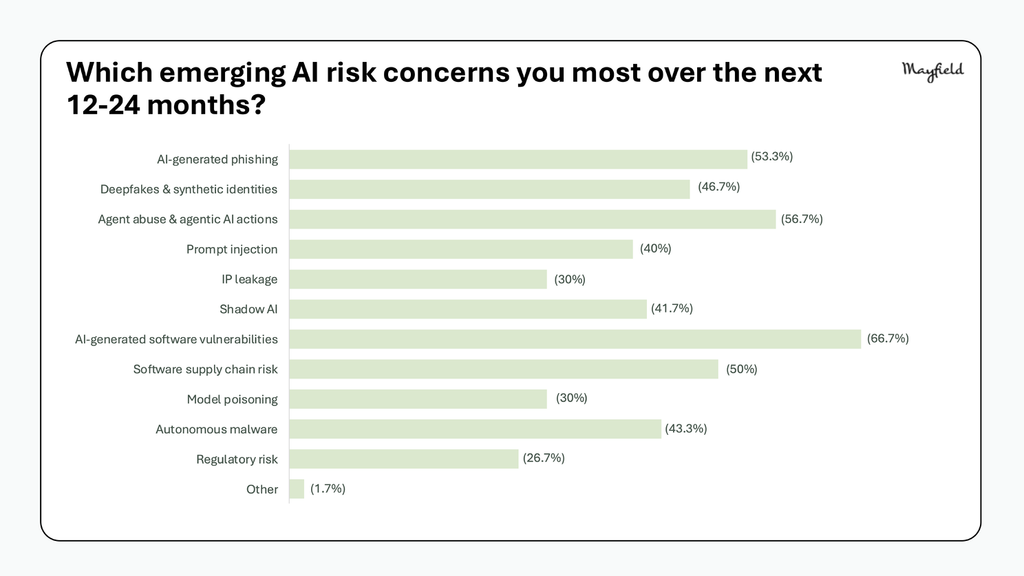
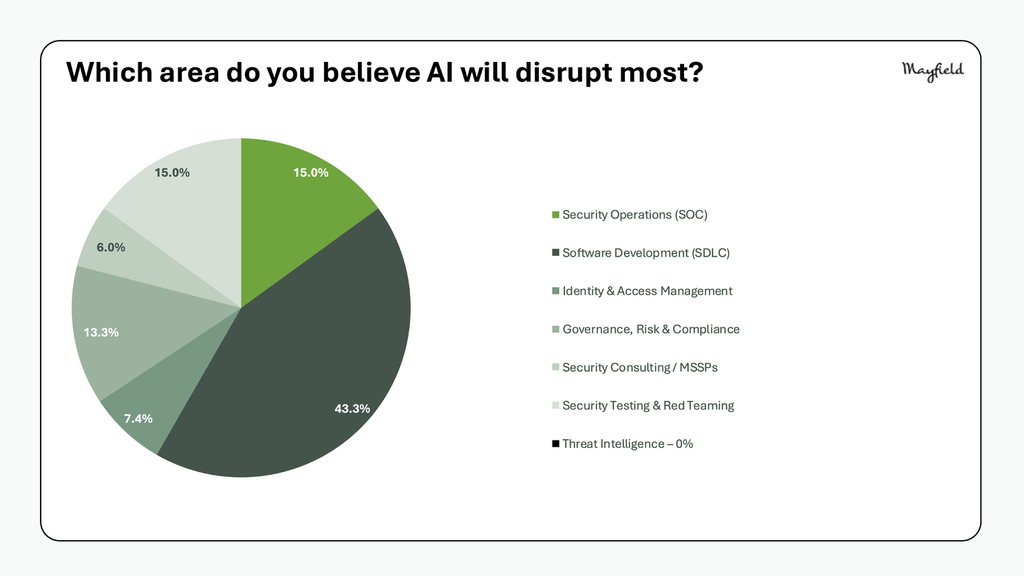
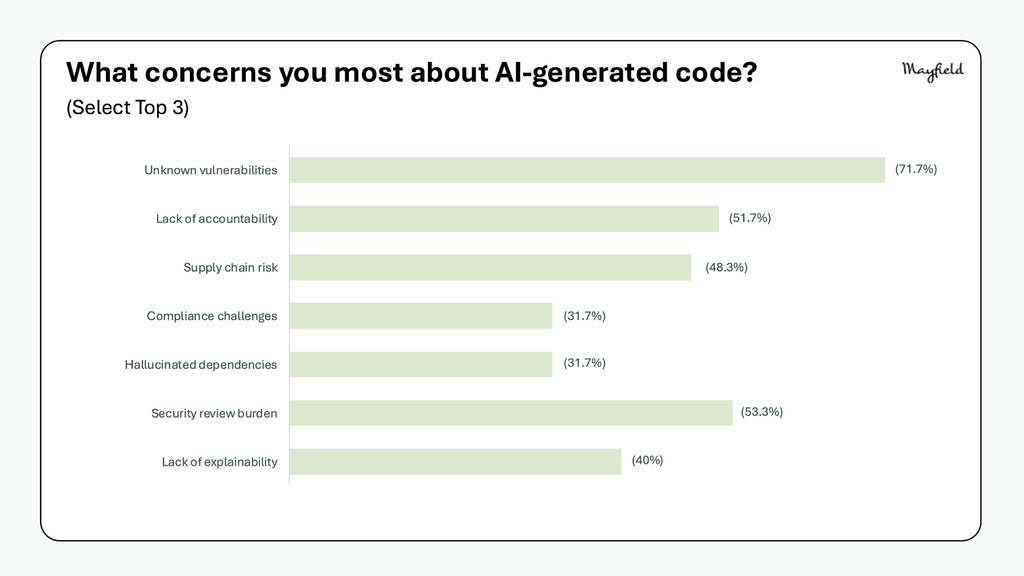
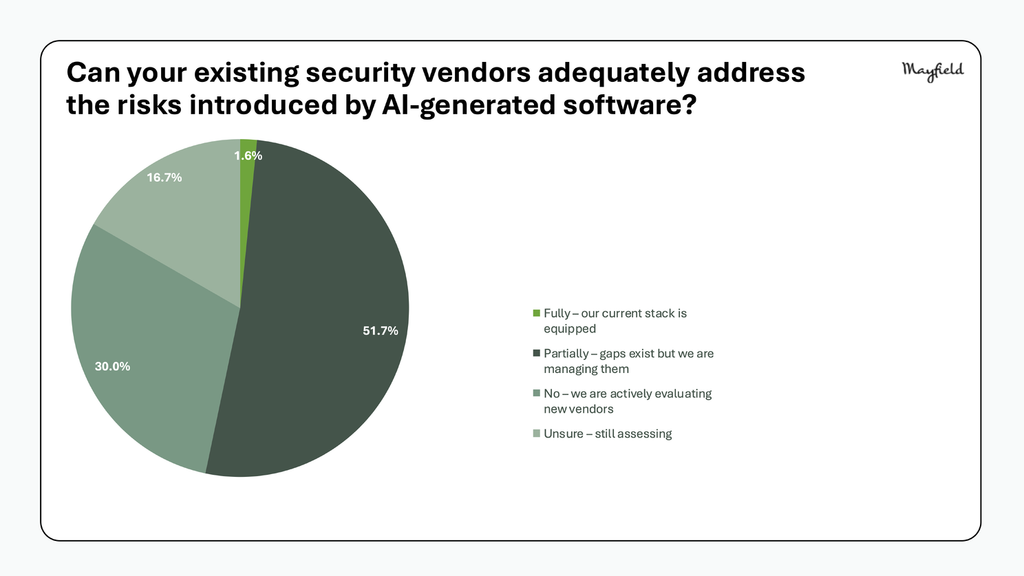
What this means for founders: The risk surface has changed, creating an urgent opening inside AI-generated software. Products that find unknown vulnerabilities, work within developer workflows, reduce review burden, and clarify accountability from creation through deployment address the problem CISOs feel least prepared to solve.
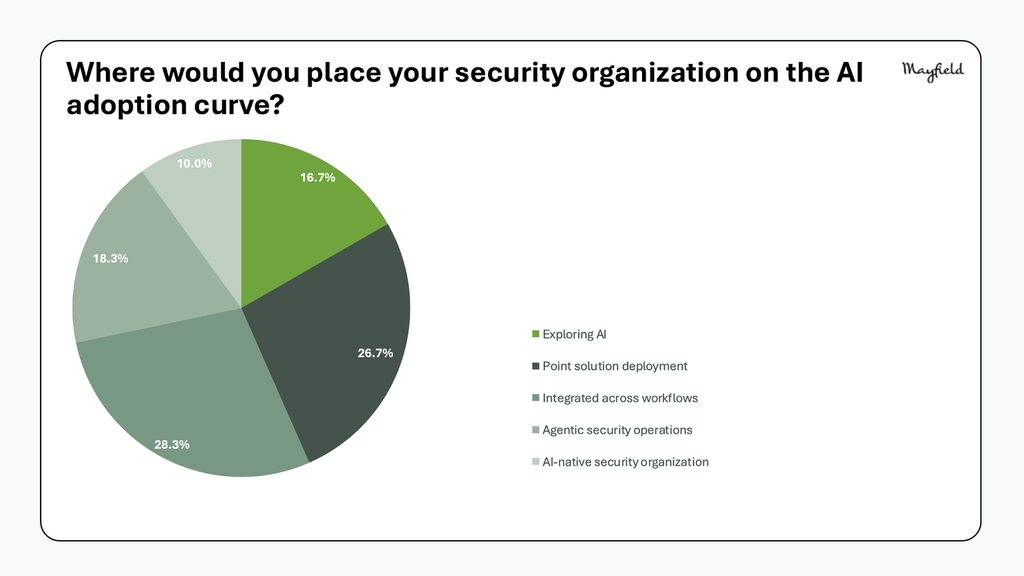
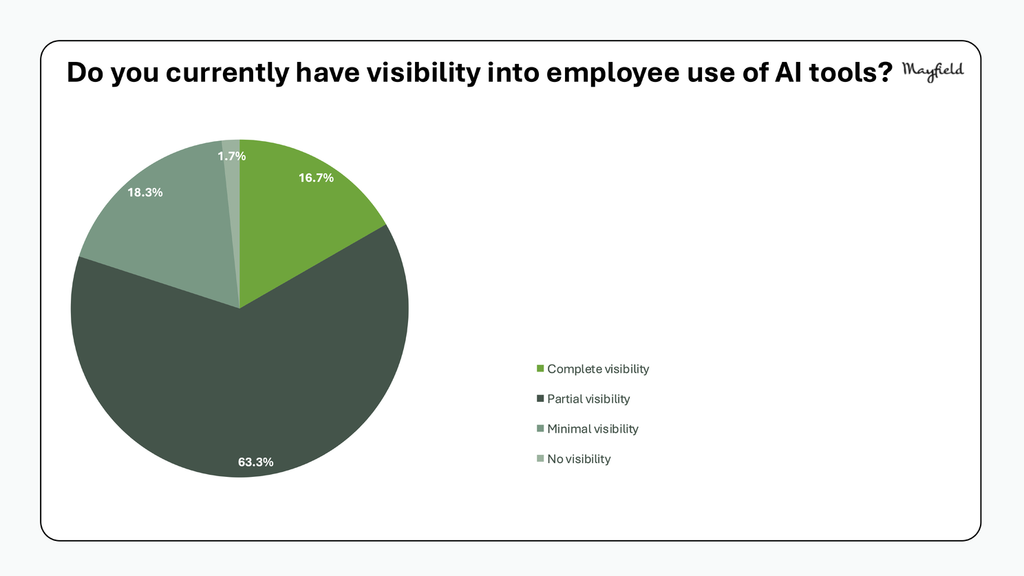
What this means for founders: Visibility creates a strong entry point into the enterprise. CISOs need a complete view of which AI systems are in use, who controls them, what data and systems they can access, and what actions they are authorized to take or have already taken. Products that turn this visibility into policy, enforcement, and measurable risk reduction can become foundational to the security stack.
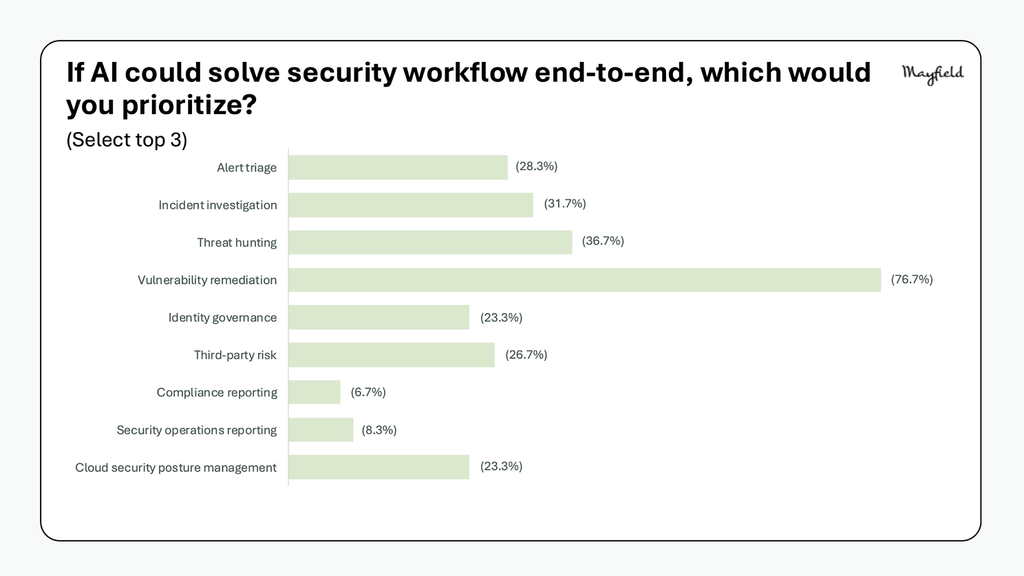
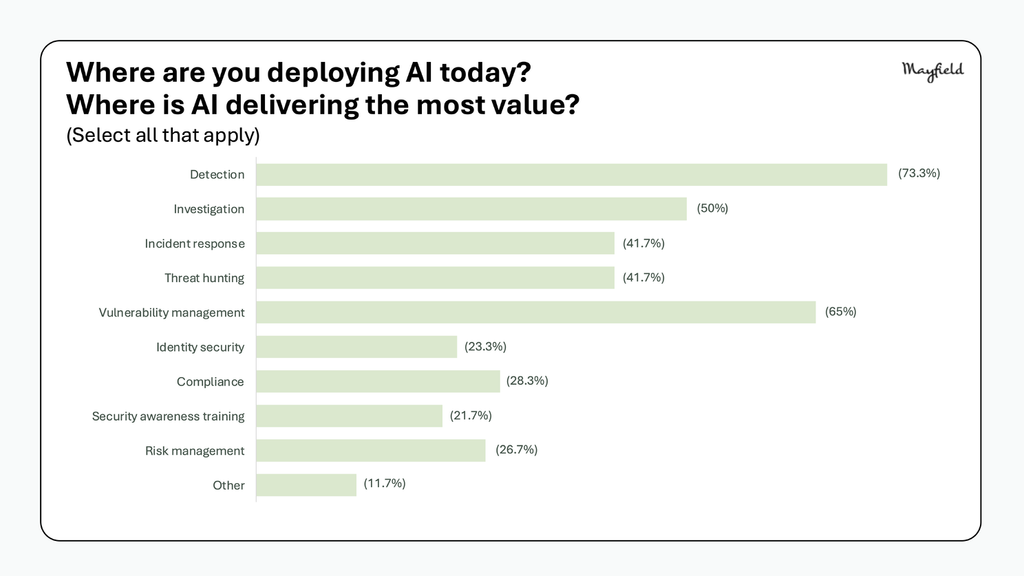
What this means for founders: Build for bounded autonomy with clear levels of authority: recommend, act with approval, act within boundaries, or escalate. Every action needs an owner, an approval policy, an audit trail, and a tested rollback path. Let customers start with recommendations and expand autonomy as they demonstrate efficacy and control.
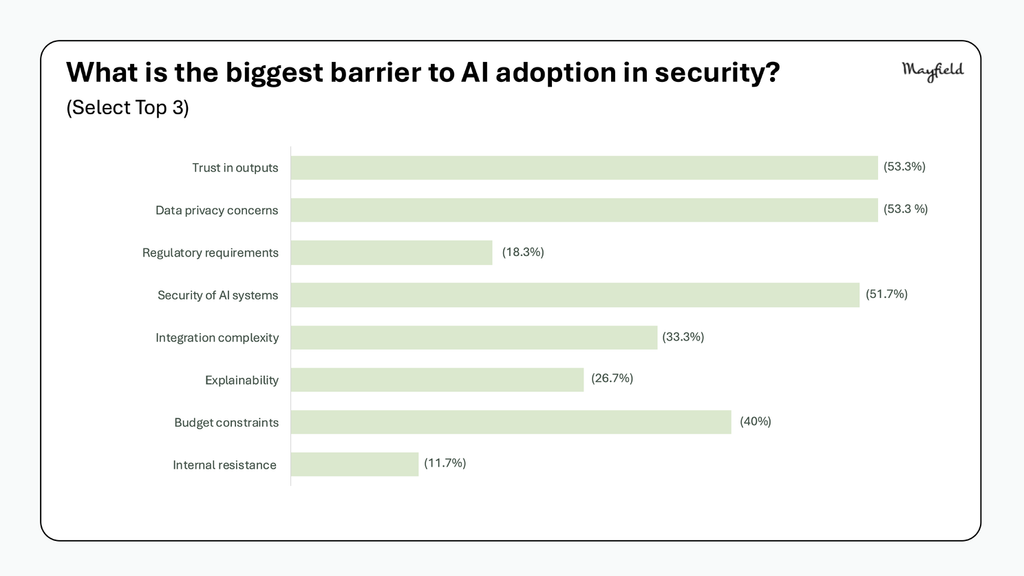
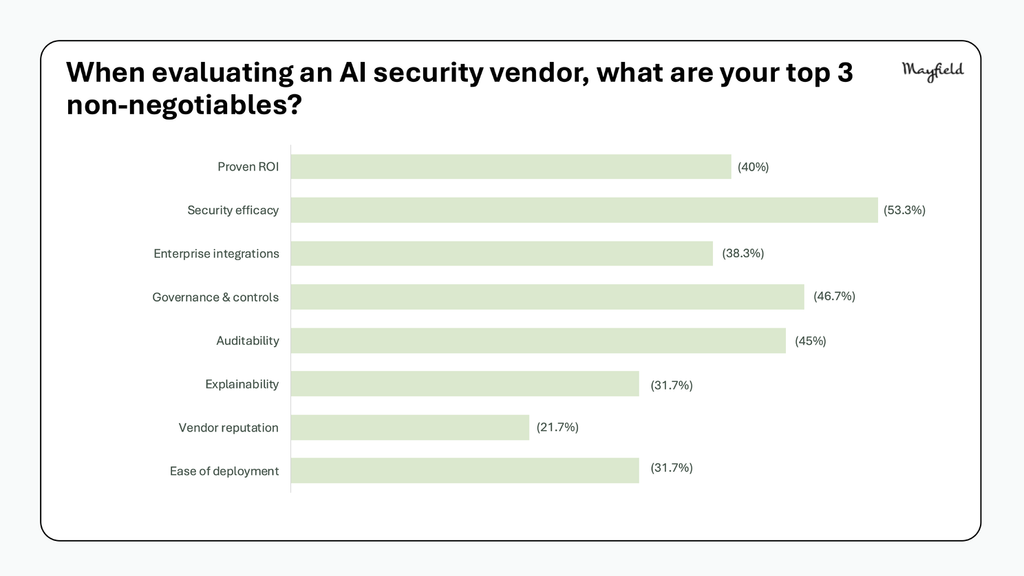
What this means for founders: Build trust into the product architecture. Show the evidence behind each recommendation or action. Make permissions and action boundaries explicit. Give customers control over data access, retention, and use. Maintain complete, usable audit logs. Provide human review, override, and rollback. Measure false actions and control failures.
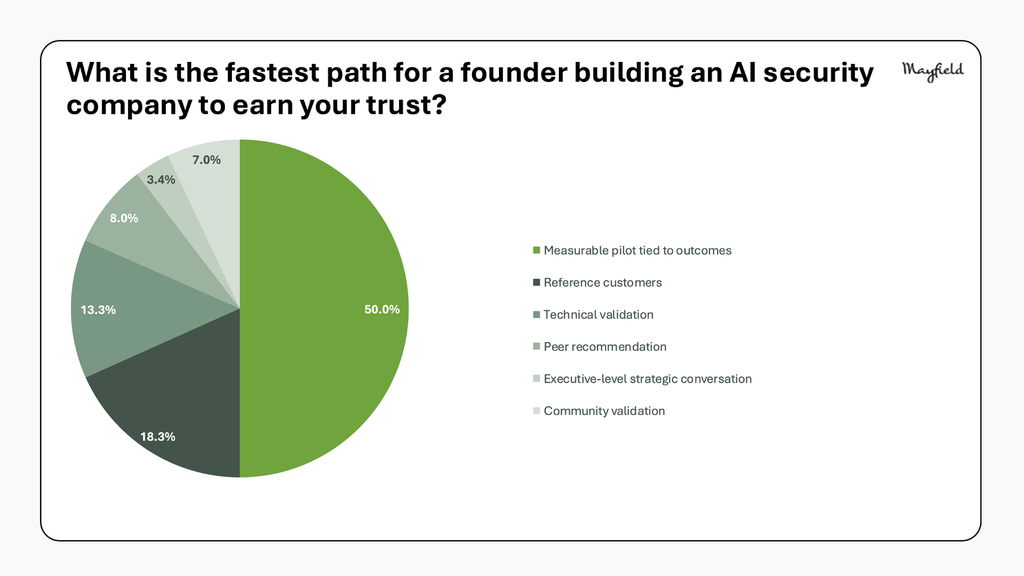
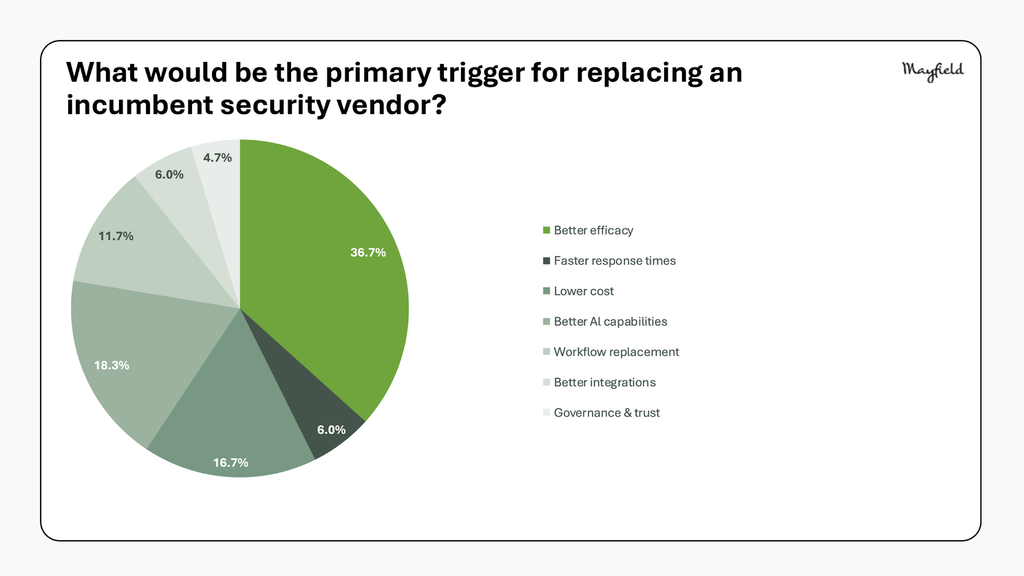
What this means for founders: Low-friction integration and measurable pilots are essential to turning interest into adoption. Give CISOs a controlled way to test the product against their own environment and a specific security outcome. Show what was found, fixed, prevented, or accelerated. Better efficacy creates the case for switching.
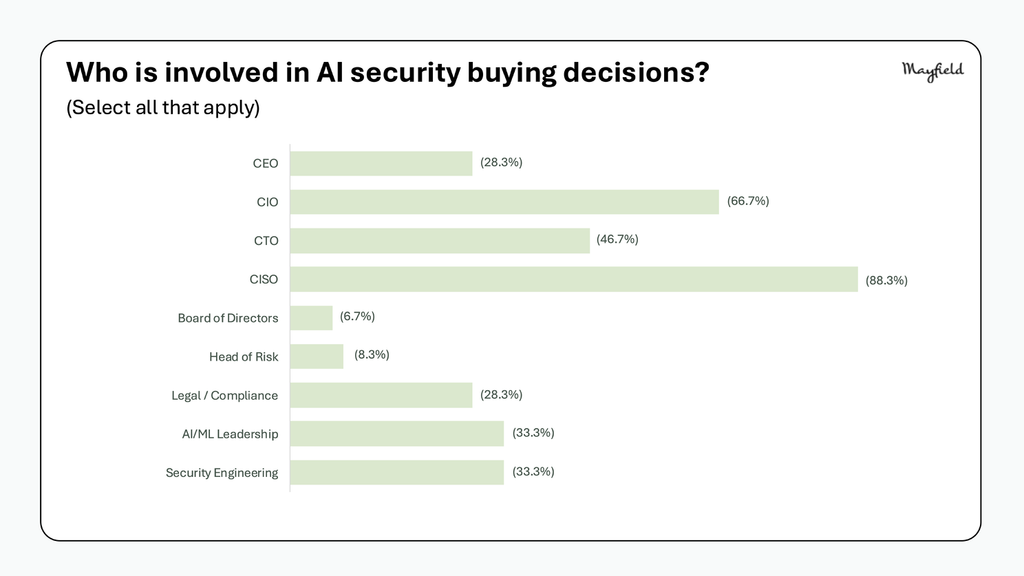
What this means for founders: The CISO owns the security problem and leads the purchase. The CIO and CTO will examine architectural fit, integration, data access, reliability, and operational impact. AI leadership and security engineering may determine whether the product can move from pilot to production.
CISOs have room to modernize with a growing budget, but most are not planning a clean-slate replacement of their security platforms. They are steadily reallocating toward products that address new risks or improve the performance of existing workflows.
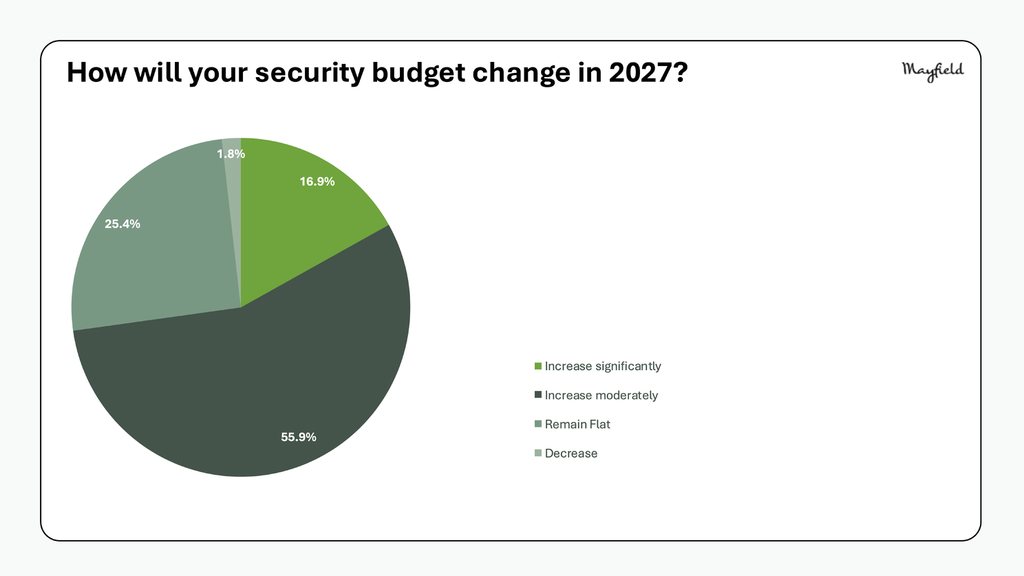
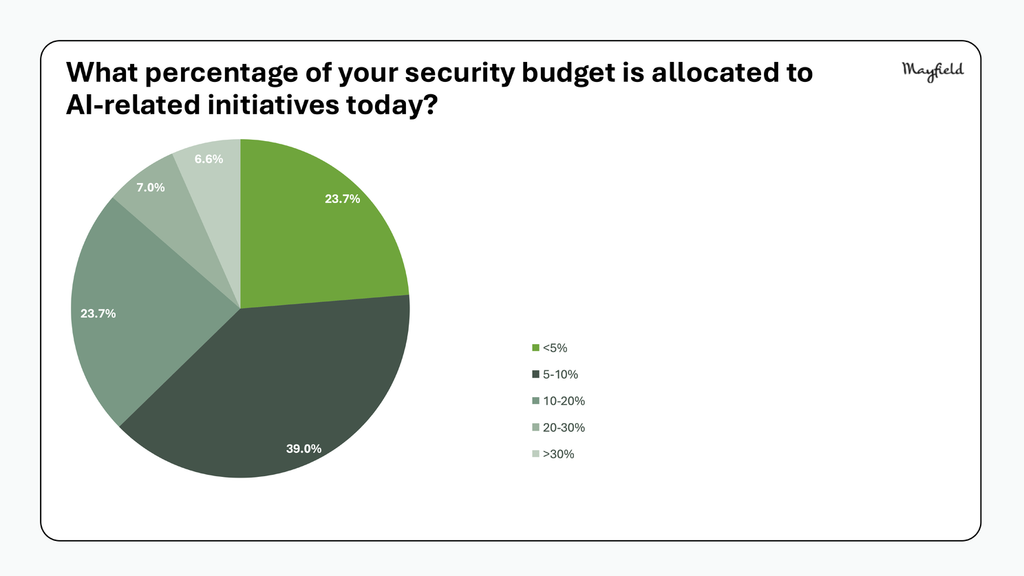
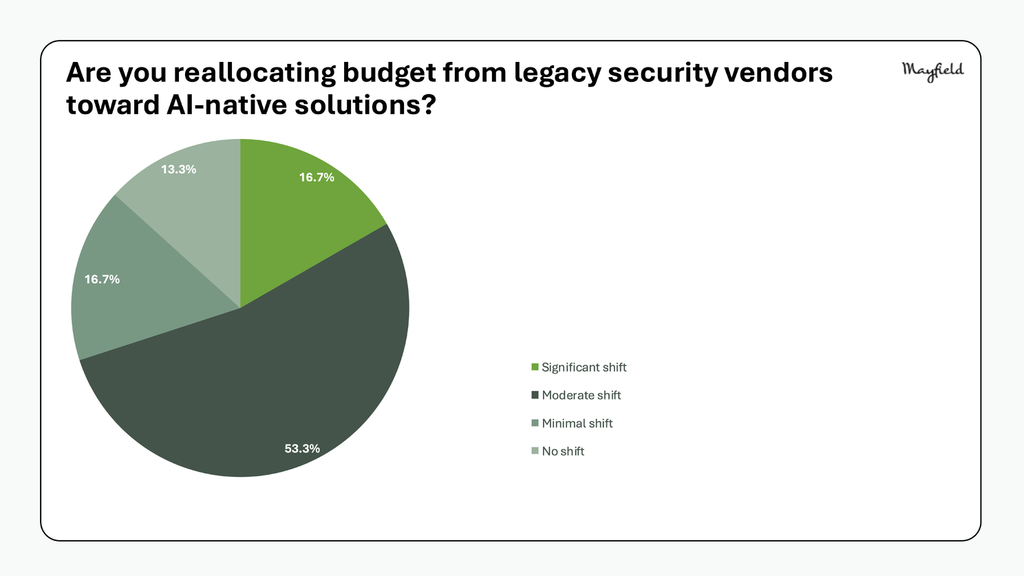
What this means for founders: The money is already moving, but most buyers are not planning a dramatic replacement of their stack. Enter through a specific, urgent workflow. Integrate with the systems the CISO already trusts. Prove value quickly, demonstrate a measurable advantage, and earn a larger share of the budget over time.
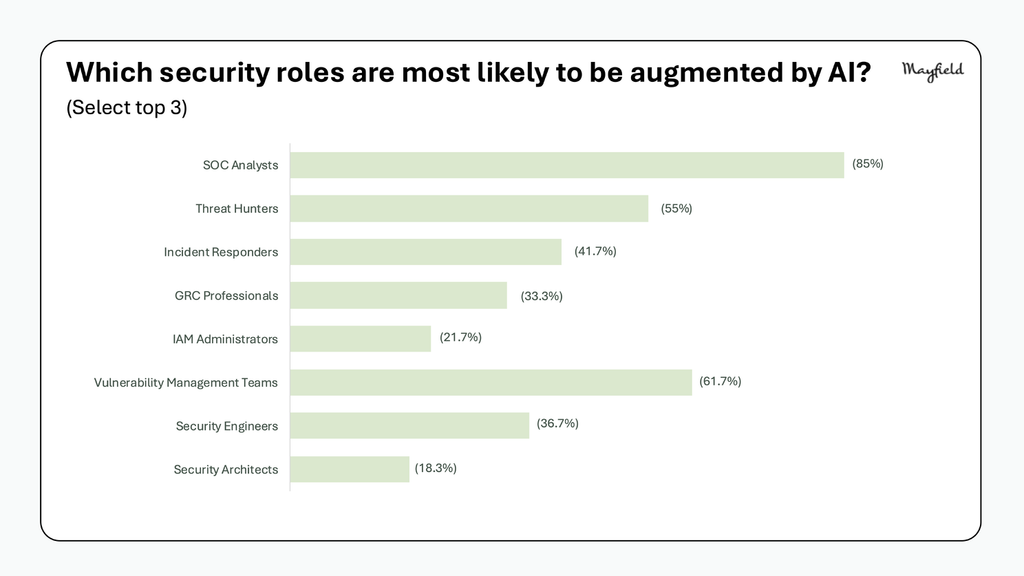
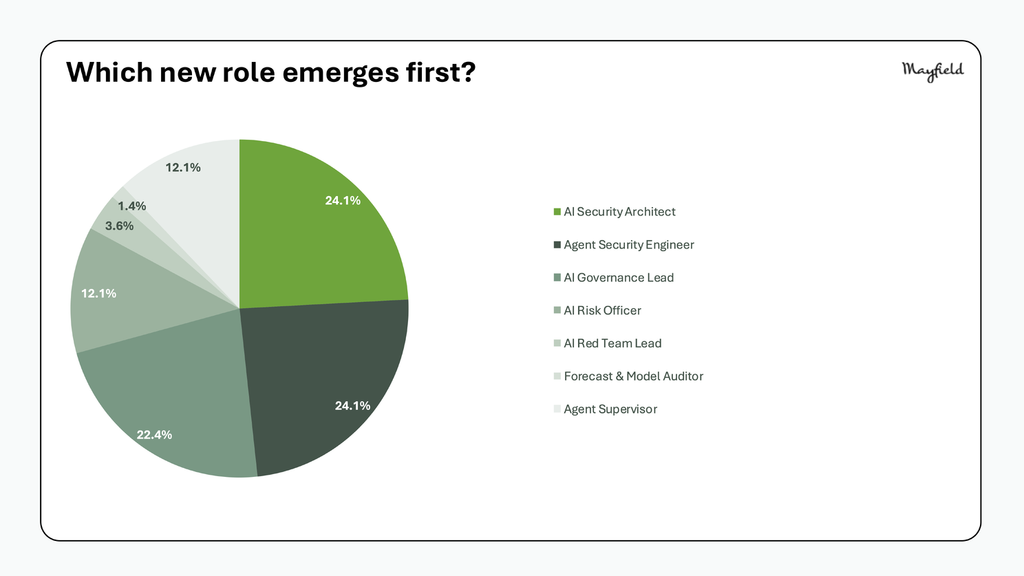
What this means for founders: As AI takes on repetitive security tasks, teams will focus more on judgment, exception handling, orchestration, and accountability. Build for this shift. Show how your product improves the analyst workflow, preserves clear human responsibility, and routes exceptions to the right person.
Microsoft, CrowdStrike, and Palo Alto Networks dominate the strategic cybersecurity vendor rankings. But when CISOs were asked, unaided, which vendor has the strongest AI capabilities today, responses spanned more than a dozen companies, including CrowdStrike, Anthropic, Palo Alto Networks, and several emerging players. A meaningful share said no one leads yet.
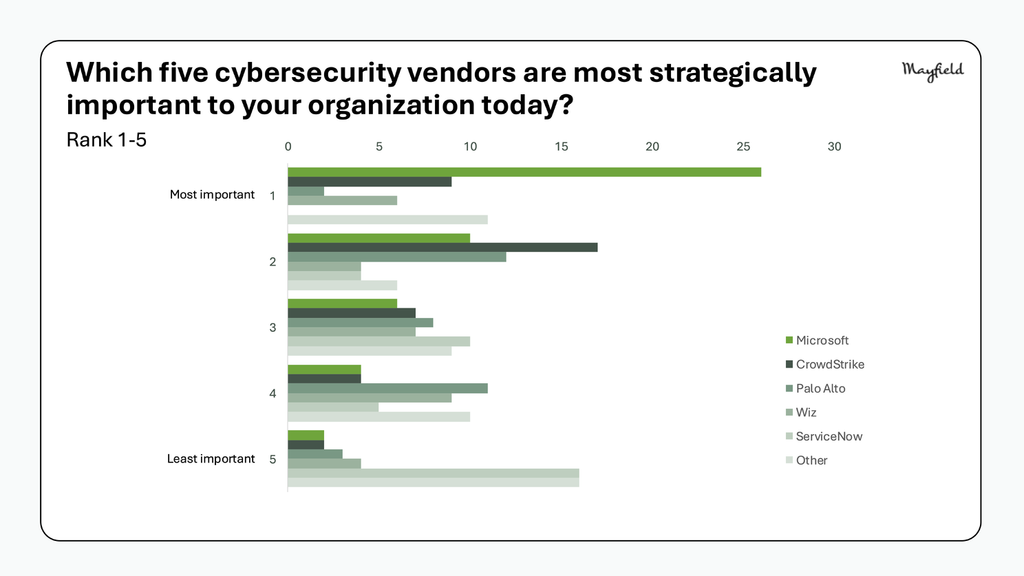
What this means for founders: CISOs are reassessing vendors based on demonstrated capability and are not assuming today’s strategic incumbent will become tomorrow’s AI leader. That gives startups room to enter. You’ll need a focused wedge, durable workflow or data advantage, and proof that survives direct comparison with the existing platform.
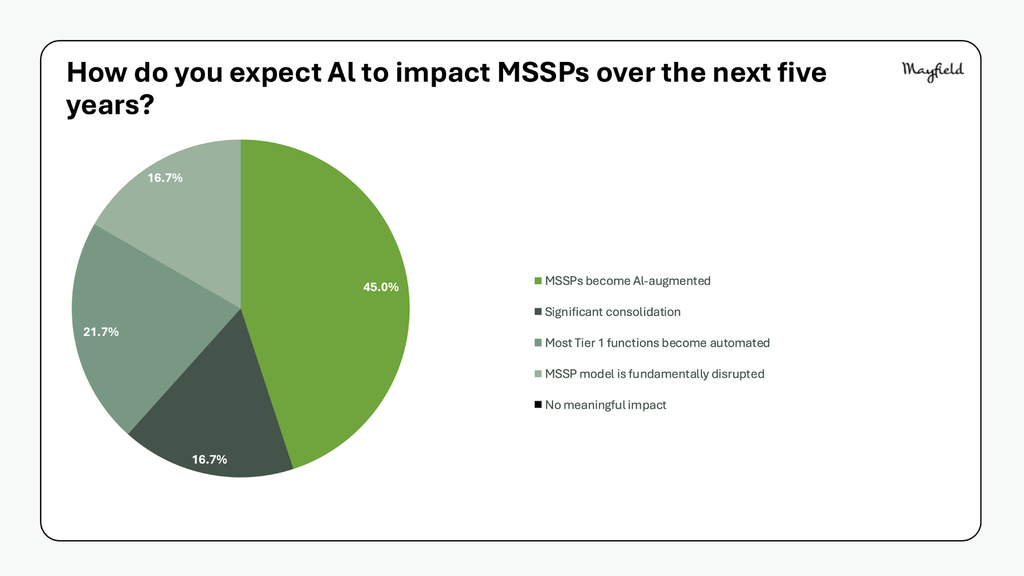
What this means for founders: MSSPs can offer distribution, deployment capacity, and access to many end customers. Founders building AI security products that improve analyst capacity, consistency, response time, and customer visibility can strengthen MSSPs while reaching many end customers through a single relationship.
CISO budgets are growing, spending is shifting toward AI-native vendors, and the market doesn’t have a clear leader yet. Founders must prove security efficacy in the customer’s environment, build governance and auditability into the product, and demonstrate measurable risk reduction before buyers will expand autonomy or replace an incumbent.
The founders who win will:
CISOs want AI to close the loop. They will give it more authority when they can see what it is doing, control how it acts, and defend the outcome.
More autonomy requires more control.
Whether you are building for CISOs or sitting in the seat, which insight is shaping your roadmap right now?


