

Mayfield surveyed 50+ CMOs on how AI is reshaping their marketing organization, and where the opportunity is for founders building today.
Two definitions up front, because both terms do a lot of work in this report:
Key insights for founders:


What this means for founders: The reallocation is already happening. CMOs are increasing budgets by largely redirecting existing spend, not adding new budget. This means every dollar you win is a dollar a legacy vendor loses.
Position your product not as an add-on, but as a replacement.
Top pain points:
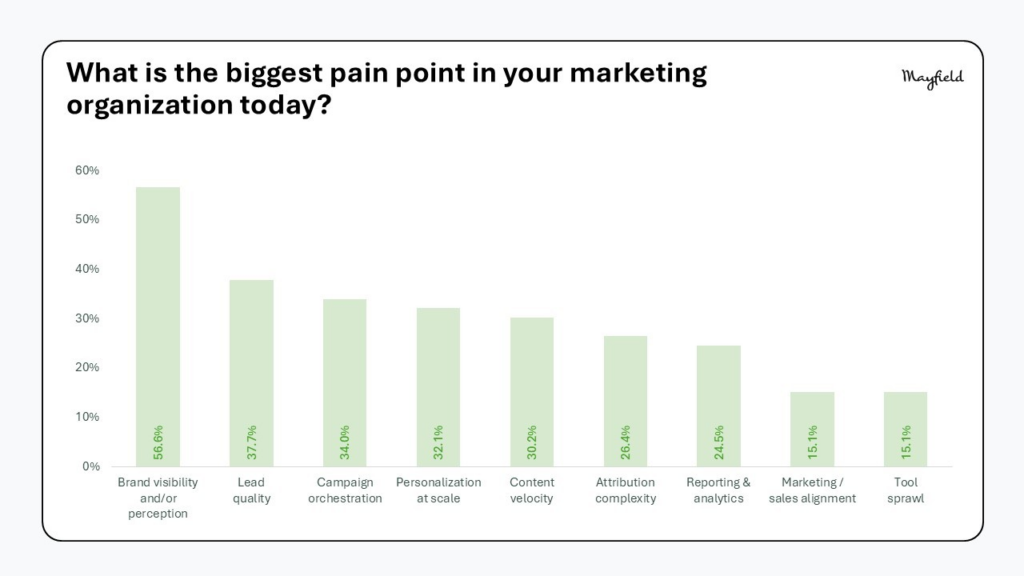
CMOs are not primarily worried about content velocity or tool sprawl. They are worried about whether their brand is breaking through and whether their pipeline is filling.
When asked which workflow they most want AI to own end-to-end, the answer is unambiguous:

What this means for founders: Brand and demand gen are the highest-value, most underserved problems in AI marketing today. Founders who can credibly automate end-to-end demand generation, not just assist with it, are targeting the biggest market in the room.
The CMO who can’t break through with their brand and can’t fill their pipeline is the most urgent buyer you will ever meet.
What would trigger a CMO to replace a legacy vendor with an AI-native solution:
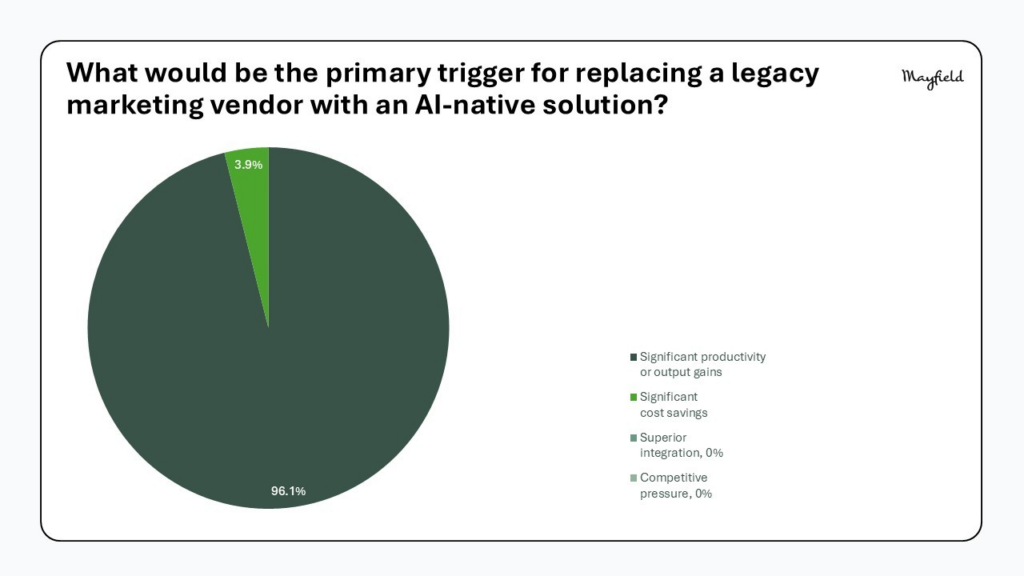
What this means for founders: CMOs will switch when they see output gains. Lead with productivity and output evidence. Show before/after metrics, and quantify the lift. Build case studies that lead with output, not features.
How CMOs measure AI ROI today:
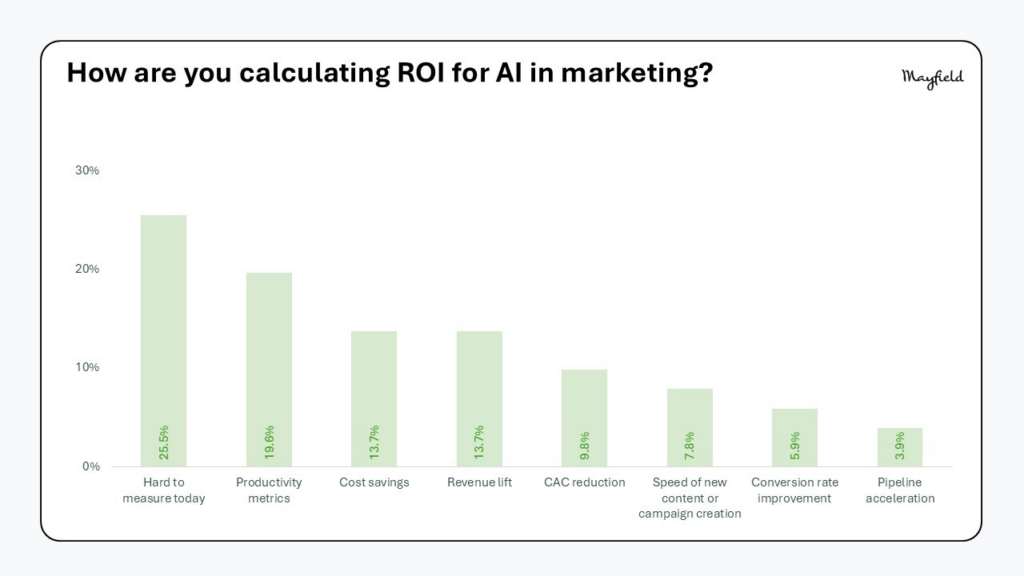
What this means for founders: More than 1 in 4 CMOs cannot clearly measure ROI from their AI investments. This is a product gap, not a buyer problem. Build measurement into your product, and empower the CMO to become your internal champion.
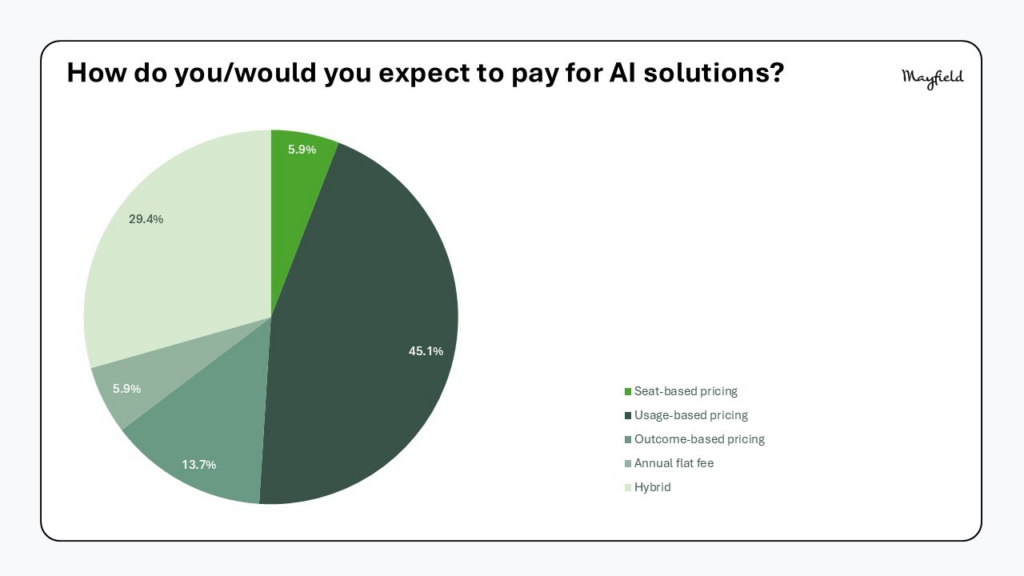
What this means for founders: The seat-based SaaS pricing model is effectively dead for AI marketing solutions. CMOs want to pay for what they use or what they get. Your pricing model needs to be based on outcomes.


What this means for founders: There is a massive gap between deployment and transformation. Most marketing orgs have AI tools. Very few have AI-redesigned workflows. The opportunity is to redesign the workflow.
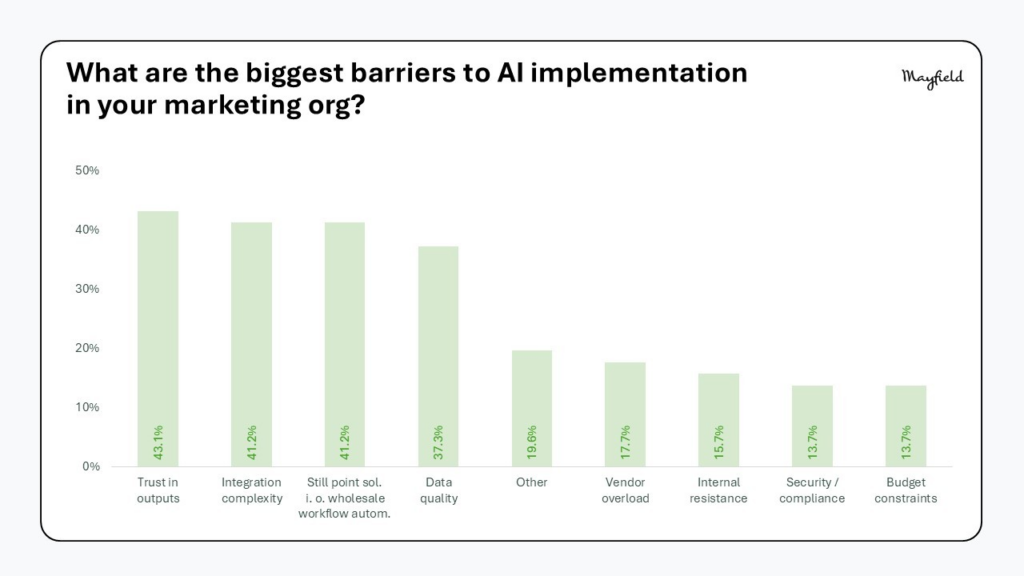
What this means for founders: The barriers are trust and integration. CMOs have the tools, but they do not yet trust them enough to hand over the workflow. Founders who solve for reliability, auditability, and deep integration will win over competitors who rely on model quality alone. Trust is the moat.
Who CMOs consult when making AI decisions:

What this means for founders: Most founders sell to the CMO and assume the decision flows down. But the CMO is consulting Marketing Ops more than anyone else, including their own CEO and CTO. Marketing Ops is where technical evaluation, integration assessment, and workflow design happen.
Top tools in use:
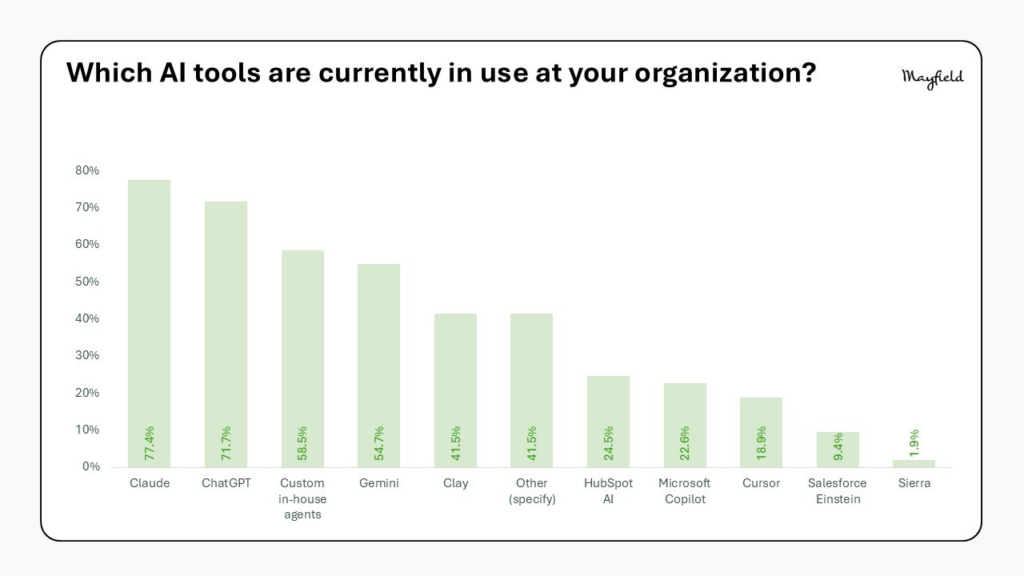
What this means for founders: The rise of custom in-house agents (58%) signals that off-the-shelf tools are not enough. CMOs are already building for their specific workflows, which is a strong signal for founders building vertical or workflow-specific AI solutions.
If marketing teams are building it themselves, they will buy it from you when you build it better.
Expected team changes in the next 12-24 months:

What this means for founders: CMOs are not just cutting headcount. They are simultaneously reducing operational roles and adding AI-native ones (see The Future CMO as Architect). The marketing org of 2027 will be smaller in volume but more specialized in nature.
The 2026 CMO market is one of the most actionable buying environments in enterprise software today. Budget is moving. Legacy is losing. Trust is the moat. Marketing Ops is the gatekeeper. Output is the only argument that matters.
The founders who win in 2026 will be the ones who:
The CMO who can’t break through with their brand and can’t fill their pipeline is sitting in the buyer’s seat right now. They have a growing budget, but are unhappy with their existing stack. They are ready to switch.
Build for them.