


Insights from Mayfield’s CXO Network 2026 Survey on Agentic AI Adoption, Strategy, and Investment
Agentic AI moved into production faster than most enterprise technology shifts we’ve seen in the last decade.
Mayfield’s 8,000-member CXO Network provides a uniquely direct view into how Fortune 50–Global 2000 technology leaders are adopting AI. This year, we surveyed 266 CIOs, CTOs, CAIOs, CISOs, and CDOs about AI agents in the enterprise.
Key Findings:


On behalf of Mayfield, thank you to all our CXO Network members. This year, 266 IT and innovation leaders across the F2000 participated in our 6th annual CXO Survey. We designed this survey to give you a strategic lens into how your peers are navigating AI adoption across industries and geographies. We hope it’s useful as you shape your own roadmap.
Gamiel Gran, Chief Commercial Officer at Mayfield
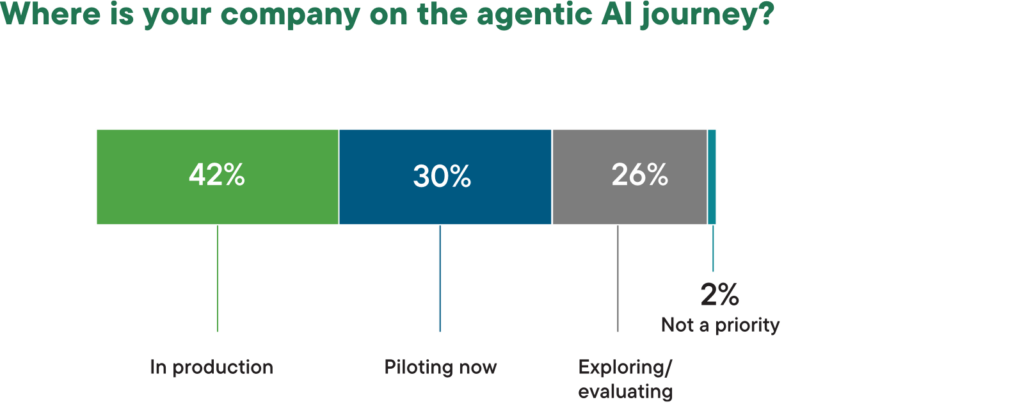
Enterprise adoption of agentic AI has accelerated dramatically. More than 4 in 10 organizations now have AI agents in production—a significant shift from exploratory pilots just 12 months ago.
Key insight: Over 72% of enterprises are either in production with or actively piloting agentic AI.
Mayfield Takeaway: Scale and platform considerations are now coming to light, as we move beyond the learning and pilot phase in the enterprise.


“We’ve moved past the question of use cases. Our challenge now is scale. AI demand from clinical, research, and operational teams is growing faster than compute, data pipelines, or governance can keep up. The only way forward is platformization—shared compute, shared data, shared guardrails.
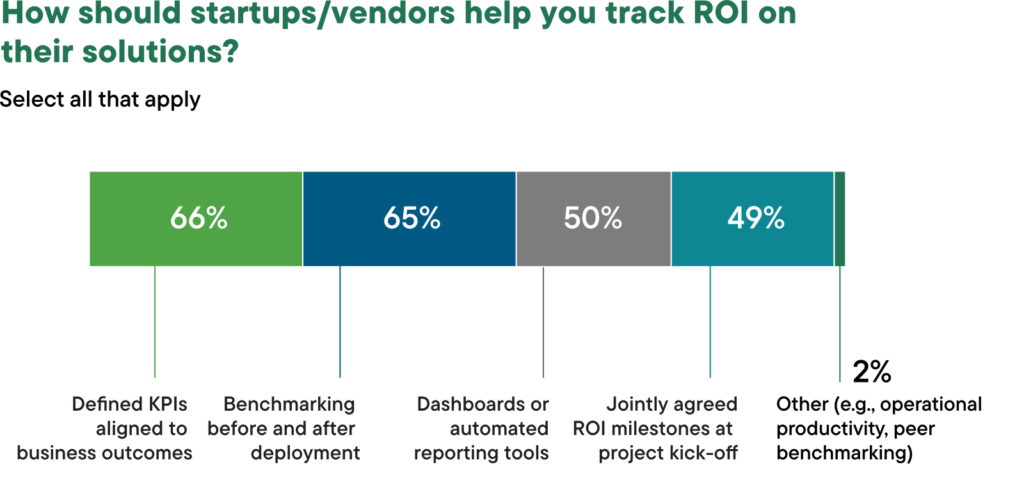
We don’t approve any AI initiative unless it delivers measurable ROI: cutting wait times from 42 minutes to under 1, reducing abandonment from 27% to nearly zero, or accelerating drug discovery by almost a decade. The biggest unlock is the compounding effect—once you remove friction in documentation, data access, and analysis, everything accelerates. AI becomes a flywheel, not a feature.”
– Tsvi Gal, CTO / Head of Enterprise Technology Services, Memorial Sloan Kettering Cancer Center


“In the agentic era, momentum is the new moat. We already have AI agents generating $15M in revenue, issuing 1.5M boarding passes, resolving 93% of customer inquiries, and autonomously selling bundles and upgrades. The next unlock is bold movement toward autonomous operations.”
– Neetan Chopra, Chief Digital and Information Officer of IndiGo Airlines
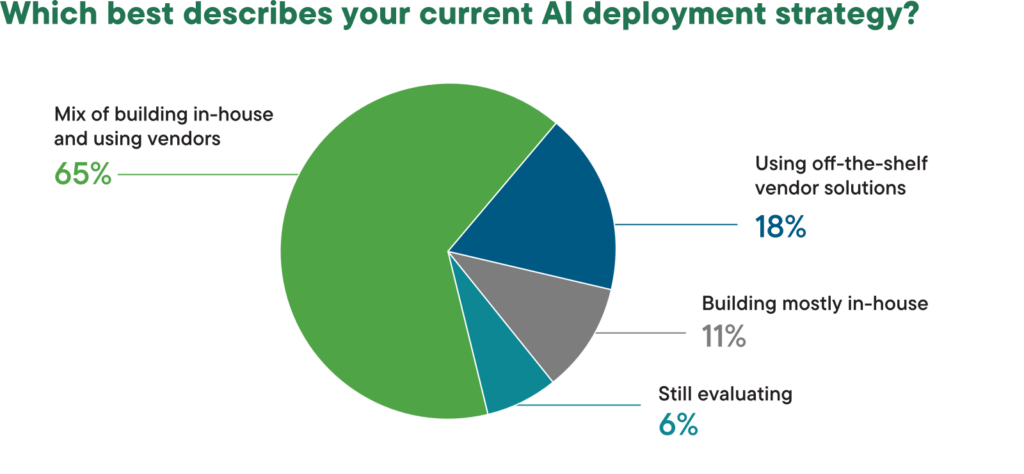
The dominant approach is hybrid: 65% of organizations combine in-house development with vendor solutions.
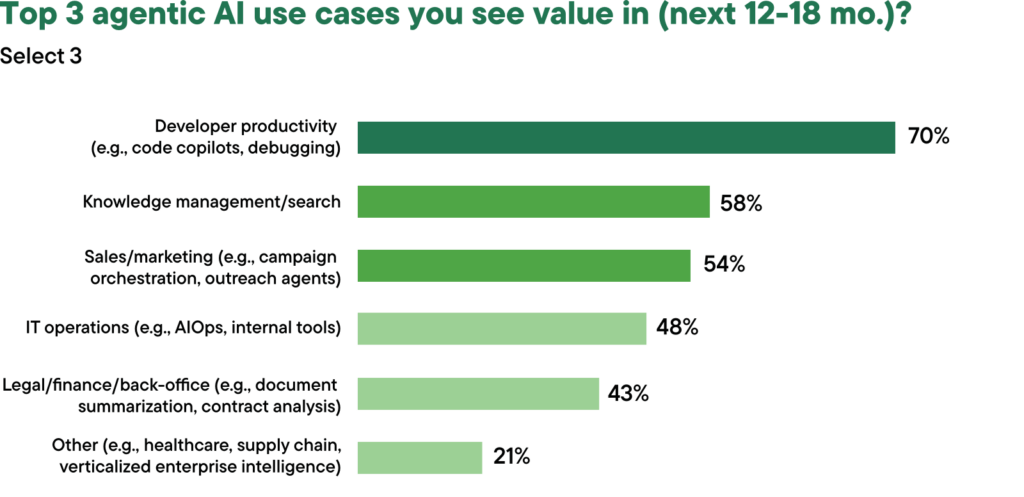
Developer productivity dominates, with 70% of CXOs identifying it as a top-three priority.


“At EdgeTI, we view AI not as an enhancement but as a catalyst for true transformation. It has fundamentally changed how we build, organize, and deliver software. By embedding AI across our development workflow, we’ve reduced time-to-value dramatically — a six-month developer can now deliver at the level of someone with three years of tenure. That acceleration allows us to redirect senior engineering talent away from backlog cleanup and toward the kind of ambitious, creative work that previously felt out of reach. AI isn’t optional for us anymore; it’s table stakes for any modern software vendor.”
– Scott Lesley, CTO of EdgeTI


“Our first production use case—AI agents in the contact center—now answers calls, engages patients multimodally, and handles scheduling. This initiative is delivering tangible ROI and funding our broader AI workstreams that have longer-term potential.”
– Jared Mabry, CIO of D4C Dental Brands
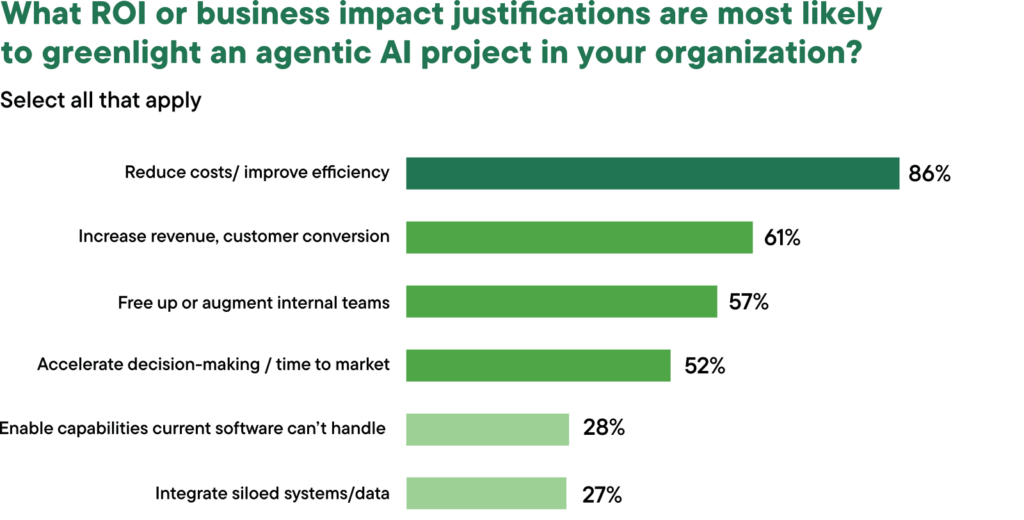
Cost reduction remains the dominant ROI justification, but enterprises are increasingly looking beyond efficiency gains.
Mayfield Takeaway: Sizable strategic decisions rest on the shoulders of these AI leaders, and while they first need to plan AI Architectures for future needs and risks, they need to augment existing people and process workflows in ways that add real value long term.
AI succeeds when it strengthens existing workflows—not when it replaces them.Neeraj Gupta, CTO, Pindrop


“AI intuition is the skills gap… leaders must rethink how they reason about AI.”
– Sachin Dangayach, Senior Director, AI, Applied Materials


“Efficiency is the quickest win, but the most durable outcome is improved decision-making. The biggest ROI surprise so far? Reducing cognitive load.”
– Madhu Reddy, EVP & Chief Information Officer, Republic of Chicago
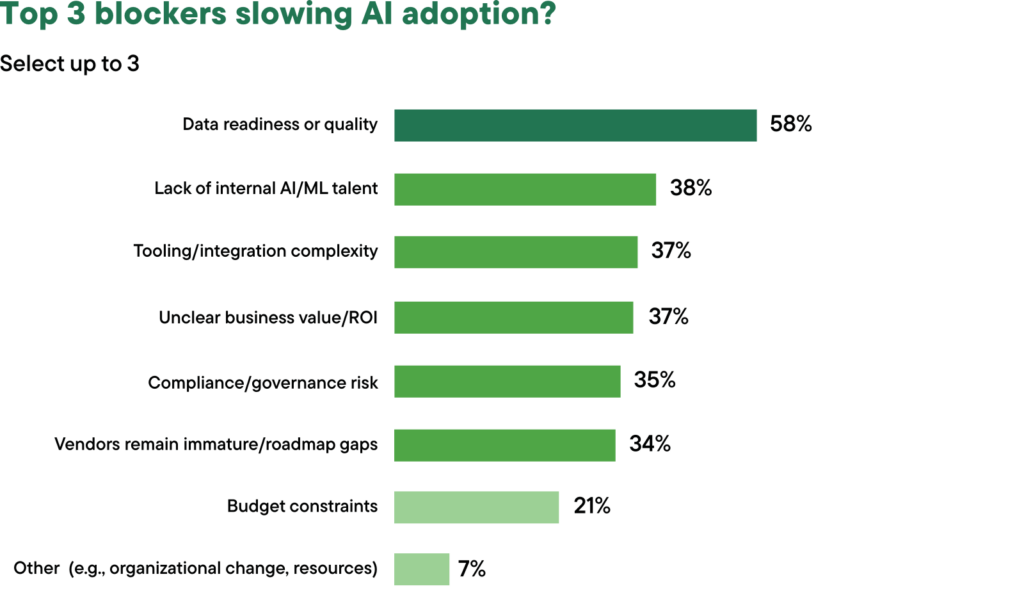
Despite strong momentum, enterprises face significant barriers. Data readiness and talent gaps lead the list.


“Our biggest challenge with AI adoption is the same one enterprises have faced for decades: interoperability. Agentic systems sound powerful, but getting them to traverse a large ecosystem like Oracle Fusion, Salesforce, and other enterprise apps — and actually do work inside those systems — is still difficult. ChatGPT is great for productivity, recommendations, and gathering information, but it’s not yet ready to post GL transactions or process guest refunds safely and reliably.”
– Chris Fallon, CIO of Wingstop
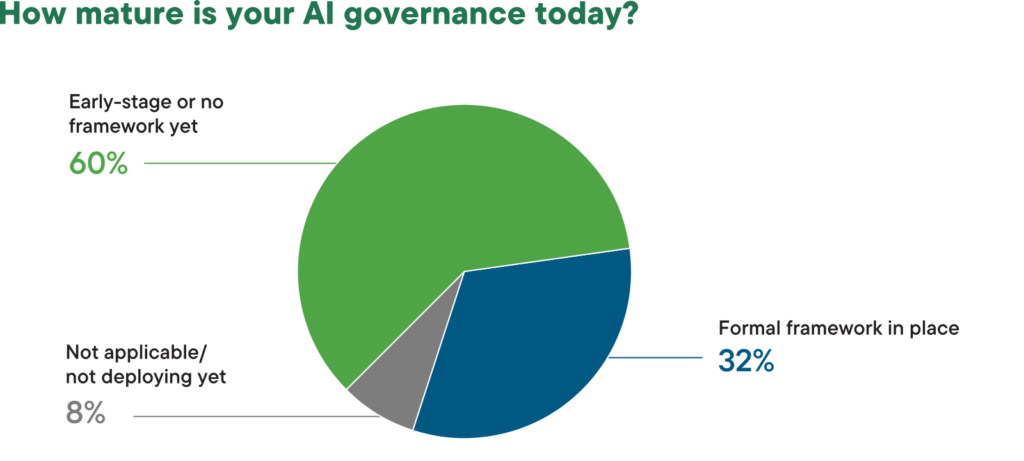
A significant governance gap exists: 60% of organizations lack a formal AI governance framework.


“In a highly regulated environment like banking, data governance is mission-critical. We have to build governance into every layer of the stack — models, data, applications, and user interfaces — and we must raise employee awareness so they understand the risks and how to use AI and agentic systems properly. At the same time, grassroots momentum is building. We want employees to have the latitude to create thousands of solutions. The people closest to the work should be able to deploy their own agents in a safe, self-serve environment.”
– Naren Chittar, Managing Director & GM of Machine Learning, JPMorgan Chase
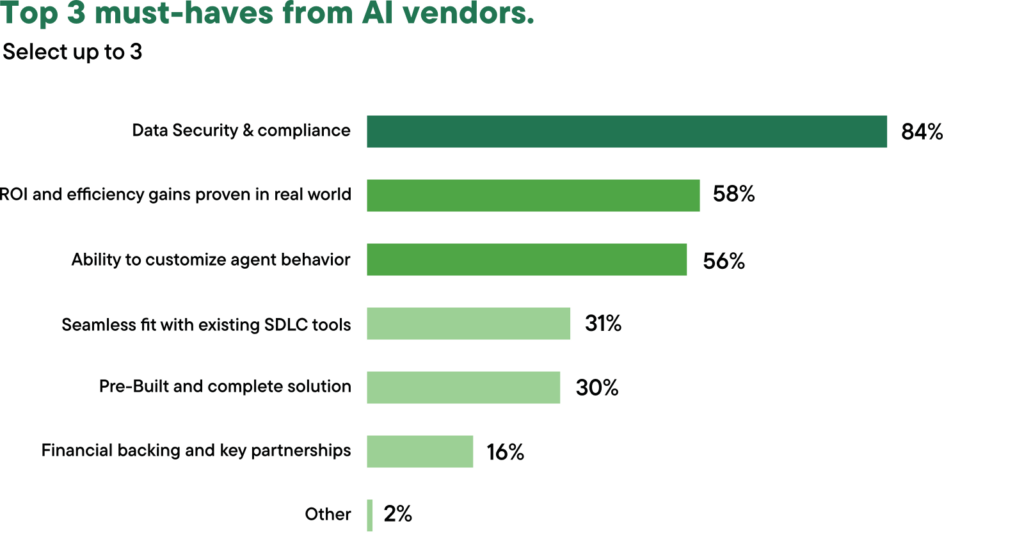
Data security and compliance tower above all other requirements—84% consider it non-negotiable.
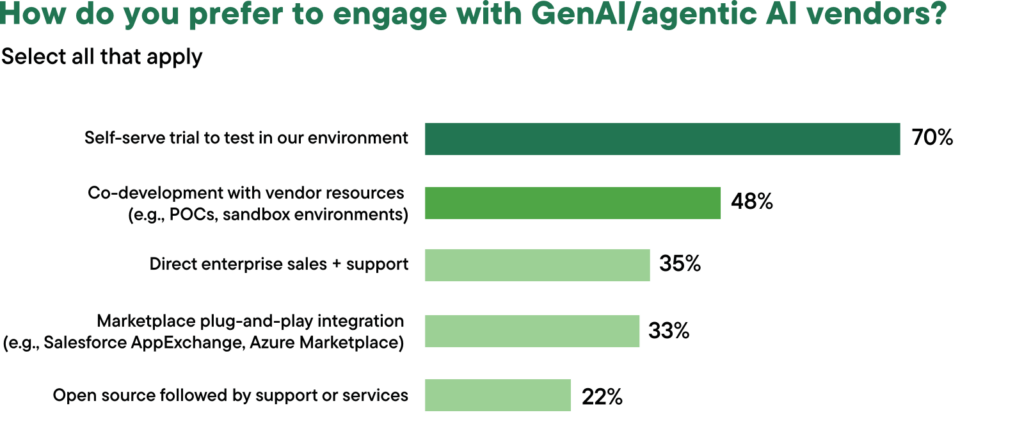
Self-service trials dominate: 70% want to test AI tools in their own environments before committing.


“There’s a lot of noise and a race to ‘agentify’ everything. The real challenge is not just building agents, but designing the right architectural patterns and abstractions so we do no harm to consumers. The AI landscape is immature and changing fast, so architecture, security, and data design matter more than ever.
The most effective thing we’ve done is bring every layer of the architecture organization together around a cohesive vision and roadmap. We prioritize the most urgent problems while still enforcing privacy, security, and responsible-use policies. We’re also using AI to clean, triangulate, and understand fragmented data sets — making the data itself meaningful and usable for AI. That was nearly impossible before.
We have to get central vs. federated data, access controls, and interoperability right if we want AI to scale safely.”
– Geeta Pyne, Senior Managing Director & Chief Architect, TIAA
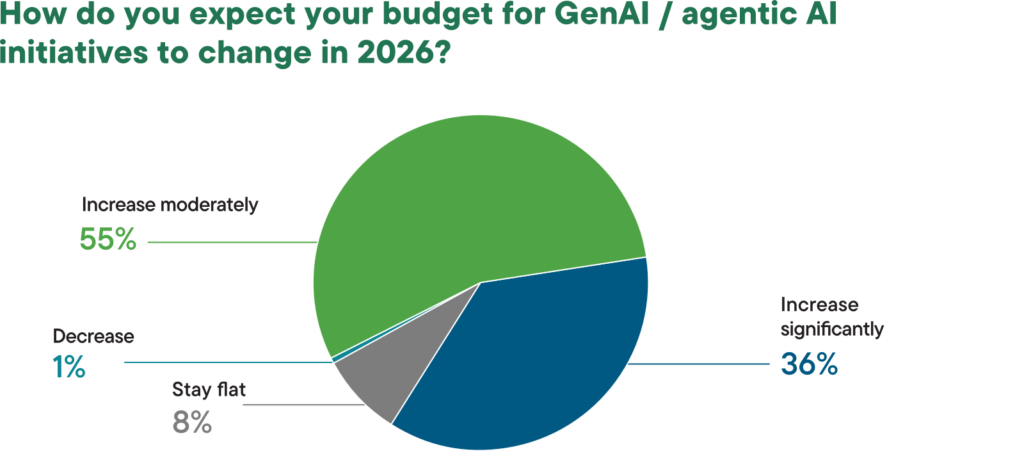
Investment momentum is strong: 91% of CXOs plan to increase their agentic AI budgets in 2026.
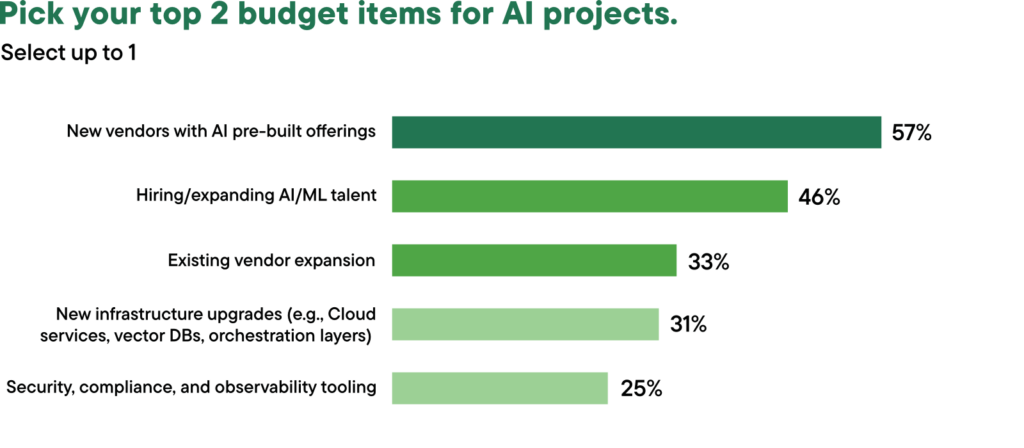
Over half of CXOs are actively reallocating budget from existing vendors toward AI-native alternatives.
“Our strategy has shifted from building everything in-house to leveraging an ecosystem: hyperscalers, SaaS, and startups. We greenlight AI initiatives based on ROI in many forms—productivity, new ways of working, or new revenue. So far, efficiency has been the most immediately achievable outcome, especially for legacy environments, but innovation is a close second. AI is unleashing the ‘art of the possible’—if we can imagine it, we can often build it.”
– Geeta Pyne, Senior Managing Director & Chief Architect, TIAA


“AI isn’t about eliminating jobs — it’s about scaling growth. That clarity creates the safety to pursue bold transformation. When greenlighting AI initiatives, we look for a risk-adjusted return that matches the level of investment, timeline, and ambition. Small projects should move fast, generate learning, and earn the right for further investment. Large AI programs must show a credible path to the same financial and strategic return we expect from any capital project.”
– Art Hu, SVP & Global CIO; Chief Delivery & Technology Officer, SSG, Lenovo
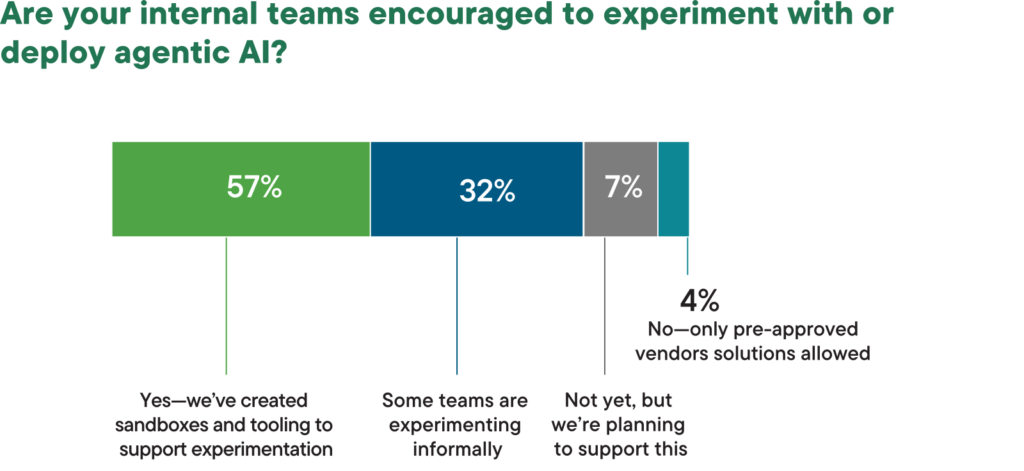
Most organizations encourage AI experimentation, with 57% creating formal sandboxes and tooling.
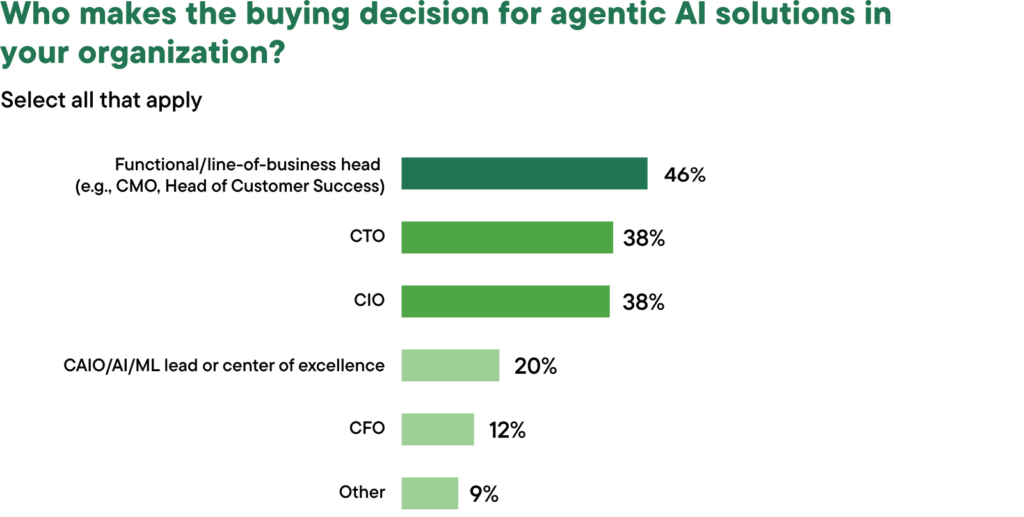
AI purchasing authority is increasingly distributed. Business leaders now match CIOs and CTOs in decision-making influence.

“If you want the board to take you seriously, stop teaching us how AI works and start showing us how it accelerates the business strategy. Value at scale is your ticket to the boardroom — not technology theater.”
Karenann Terrell, Board Director, UiPath; Former CIO Walmart, Baxter, Mercedes-Benz

“CIOs must meet the board where it is—because directors span every level of AI literacy. Frame AI in two ways: how it makes today’s business model faster and more resilient, and how it may reshape the business model entirely. When you focus on business outcomes, not the technology, you move the board off the defensive and into meaningful strategic dialogue.”
Anna Catalano, Board Director, Frontdoor, HF Sinclair, Ecovyst and former SVP and President BP and Aramco

“Boards don’t want AI demos—they want to understand growth, competitiveness, and risk. The CIO’s role is to translate AI into the KPIs the board already uses to run the company. Anchor every AI proposal in measurable outcomes, pair it with a simple risk framework, and show how governance, ethics, and compliance are being handled from day one.”
Diane Tryneski, Board Director, Southern New Hampshire University; INPCS4 and Former CTO/CDO Senior Executive at Disney & Discovery

“When you speak to the board about AI, remember you are speaking as an operator, not a technologist. Boards care about shareholder value: productivity, cost, resilience, and continuity. The CIO’s highest contribution is to equip the CEO with the insight to frame AI’s risks and opportunities in financial terms the board can act on.”
Wendy M. Pfeiffer, Board Director, Qualys, Opnova; Former CIO Nutanix & GoPro

“AI carries enormous upside—but only if leaders balance innovation with experimentation. Boards don’t want perfection; they want momentum tied to real business outcomes. CIOs should help CEOs articulate how AI strengthens competitiveness, accelerates results, and unlocks talent—because AI is now a strategic enabler for every stakeholder in the company.”
Tammy Erwin, Board Director John Deere, F5, Xerox; Former CEO Verizon Business
The 2026 CXO AI Survey reveals an enterprise landscape at an inflection point. Agentic AI has moved decisively from experimentation to strategic priority:
1. Production is the new baseline. With 42% in production and 30% piloting, the question has shifted from ‘should we adopt’ to ‘how do we scale.’
2. Data readiness is the critical path. The #1 blocker isn’t technology—it’s data quality and integration.
3. Governance can’t wait. With 60% lacking formal frameworks, the gap between adoption and risk management is widening.
4. The vendor landscape is shifting. Over half are reallocating budgets from legacy vendors to AI-native solutions.
5. Business leaders are at the table. Functional leaders now match CIOs and CTOs in decision-making influence.
“For 2026, we’re exploring agentic workflows that rebuild core processes end-to-end. A year from now, our business will make decisions faster, resolve issues proactively, and deliver experiences that feel far more personal. The biggest unlock ahead is decision intelligence — AI that blends data, context, and human judgment.”
– Madhu Reddy, EVP & Chief Information Officer, Republic of Chicago
This report draws from Mayfield’s 2026 survey of 266 CXOs from Fortune 50–Global 2000 companies and high-growth enterprises, conducted through the Mayfield IT Leadership Network. See past annual CXO surveys here.

Executive Summary
1. Where Enterprises Stand on Agentic AI
2. High-Value Use Cases and ROI Expectations
3. What’s Slowing Adoption
4. What CXOs Expect from AI Vendors
5. 2026 Budget Outlook
6. Organizational Readiness
Conclusion: The Path Forward
About This Research
This playbook draws from our 2026 survey of 266 CXOs from Fortune 50–Global 2000 companies and high-growth enterprises, conducted through the Mayfield IT Leadership Network.

