

OpenClaw is starting to look like Linux for agents.
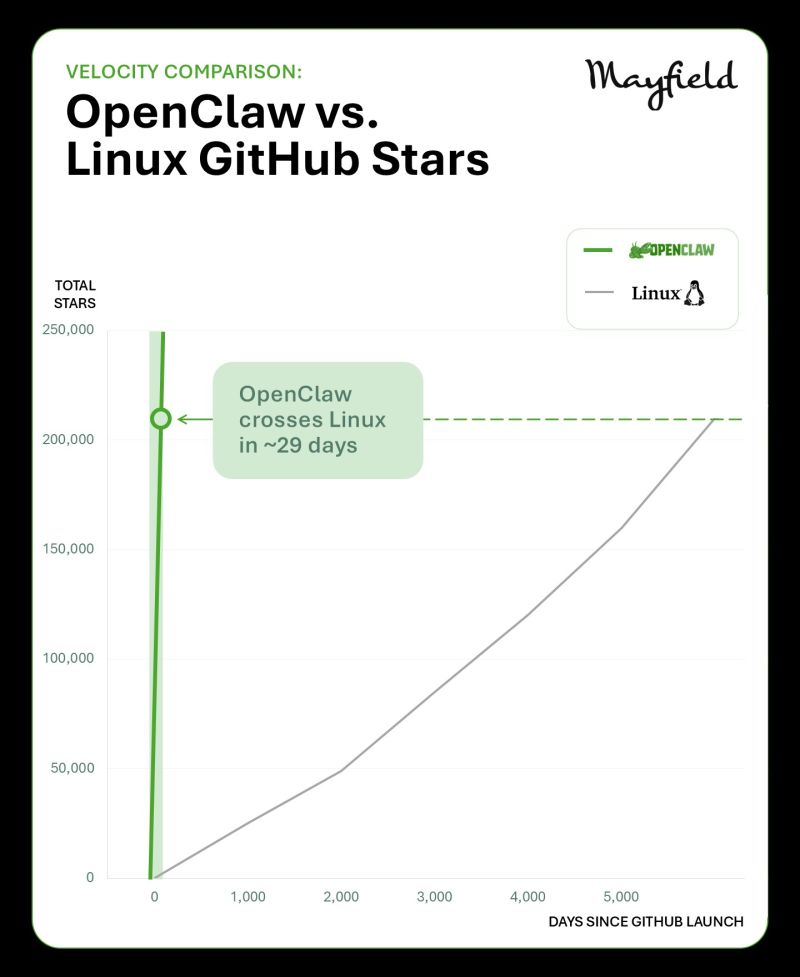
Created by Peter Steinberger, OpenClaw is an open-source agentic OS in which personal AI agents can perform real work by calling tools and running workflows. It’s like Linux for the agent era, with a compressed adoption timeline. What took Linux 15 years, OpenClaw did in one month. In early 2026, it became the fastest-growing open-source project in history, surpassing Linux in GitHub stars within one month of launch.
The key primitive is skills: packaged capabilities that turn a generic agent into a specialist. What makes OpenClaw different from Linux is that agents are taking action. That changes the risk profile of everything built around the runtime.
A new class of security risks is showing up. God-mode agents mean that a single bad input can lead to a full system compromise. Unverified skills behave like malicious npm packages. Untrusted inputs can steer agent behavior through prompt injection. And there’s no identity model yet: no audit trail, no accountability, and no revocation.
If the Linux analogy plays out, we know what comes next. An OpenClaw stack (what I am calling “CLAW stack”) will emerge similar to the LAMP stack that powered the web era (Linux, Apache, MySQL, PHP). I believe there will be many opportunities for companies, both big and small, in the OpenClaw ecosystem, including:
Once the infra layers for OpenClaw are in place, numerous vertical and domain-specific agent companies will thrive.
The trillions in value creation didn’t come from Linux. It came from the ecosystem built around it. Multi-billion-dollar companies were created.
The same will happen in the OpenClaw ecosystem, which will also create big companies. The race to build them is already on.
Big companies are moving fast. NVIDIA‘s NemoClaw is an early signal. Incumbents have distribution and capital. Startups have speed and depth. The open-source moment creates room for both, but who will win?
Bottom line: OpenClaw unlocked what agents can do. The next generation of companies will define what agents are allowed to do, how they’re governed, and how they create economic value. In my next newsletter, I’ll share opportunities and risks in the OpenClaw ecosystem, along with advice for founders.