


This article is part of our Future of AI series from Imagination in Action 2025 Silicon Valley Summit — where founders, leaders, and investors explored what’s next for AI. Explore the magazine.
The best startup ideas are no longer being hatched in dorm rooms and garages. They’re emerging from university research labs, where AI is turning academic breakthroughs into commercial goldmines.
Mayfield partner Vijay Reddy noted that AI for research and innovation is fast becoming a key investment area. That’s particularly true for domain-specific models meant for use in research-intensive fields like life sciences and physics. They believe founders with unique problem insights and passion—rather than just technical skills—will build the most valuable companies.
The reason is simple: AI is fundamentally reshaping how science gets done. It acts as a powerful discovery engine that augments human intellect, automates tedious research processes, and uncovers insights from vast datasets that were previously inaccessible.
“AI will spark a revolution in the way that we do science”
Sam Rodriques, Future House
Within a few years, AI will manage day-to-day research processes, automating everything from literature searches and data analysis to hypothesis generation and experiment planning, according to Sam Rodriques, CEO of FutureHouse, a nonprofit dedicated to building AI scientists.
This isn’t just incremental improvement. Rodriques believes AI will spark a “revolution in the way that we do science.”
Uncovering what’s hiding in plain sight
AI’s ability to mine the troves of existing datasets is already helping us uncover discoveries and overcome barriers in science.
Academic research creates innovative, disciplined thinkers who push boundaries without fear—qualities valuable in corporate settings too. To maximize group potential, you must “make them curious” and help them “feel that they can push on the boundaries,” said David Siegel, co-founder and co-chairman of Two Sigma.
Yossi Matias, VP and head of research at Google, sees AI as a co-pilot in the lab. He framed AI within a “magic cycle of research,” where machine intelligence accelerates every phase of scientific discovery: identifying a problem, conducting experiments, and applying solutions at unprecedented speed.
For instance, Google’s DeepMind “AI co-scientist” doesn’t just crunch data, it reads papers, generates hypotheses, validates them, and ranks the most promising leads. It’s already helped uncover new therapeutic targets for liver fibrosis, hinting at a future where AI isn’t just supporting science, it’s driving it.
In neuroscience, AI is mapping the human brain through connectomics, while in medicine, models like Med-PaLM, a large language model from Google Research, and even Google Gemini are passing medical licensing exams at expert levels.
In biotech, companies like Retro Biosciences are using AI to reverse aging at the cellular level, predicting protein folding and identifying therapeutic targets with impressive precision.
In other areas, AI virtual labs are designing protein binders for COVID variants faster than human teams.
Opportunities for industry growth
But any startup in science needs to turn their ideas into go-to-market strategies by bridging the gap between academic research and commercial needs. Founders also have to balance sharing research openly versus holding it back to spin out a company.
While academic research projects often gain traction on their own, enterprises need a committed commercial entity for long-term support, bug fixes and production-readiness. This was the catalyst for the founders of Databricks, Ion Stoica and Matei Zaharia, who transitioned from academic research at U.C. Berkeley to start their own company. They wanted to ensure the continued development and support of the technology they’d created.
Stoica and Zaharia advise students and entrepreneurs to pick a big problem they are passionate about solving, then build rigorous evaluation systems to validate their progress.
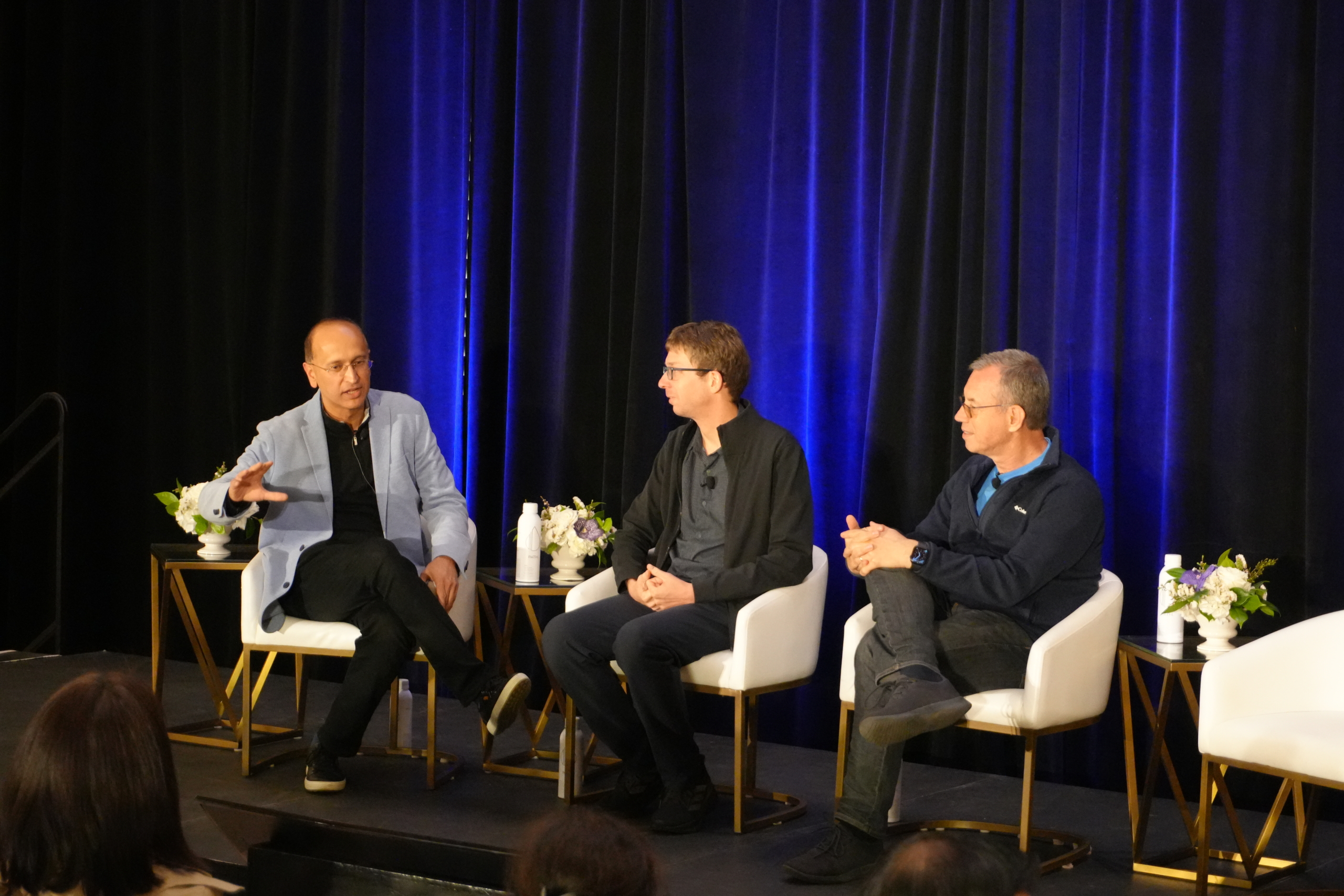
“A major limitation in enterprise AI adoption is how poorly teams set up validation for their applications,” Zaharia explained. For AI to be effective in science, companies need high-quality data, rigorous evaluation methods, and the engineering infrastructure to support large-scale models.
One area of research Zaharia is excited about is optimizing models using natural language feedback, not just numerical rewards. This method is much faster and could accelerate discovery in scientific fields where physical experiments are expensive.
The new AI research landscape
Meanwhile, many companies are building large foundational models aimed at scientific research, including Google, OpenAI, Anthropic and Axiom. Each is taking a distinct approach.
Anthropic does research and develops safety protocols and enterprise applications, growing a business where customers pay for token usage. Andi Peng, researcher at Anthropic, mentioned the company’s efforts to scale up its AI models and train their personality and behavior to be more helpful and collaborative for people.
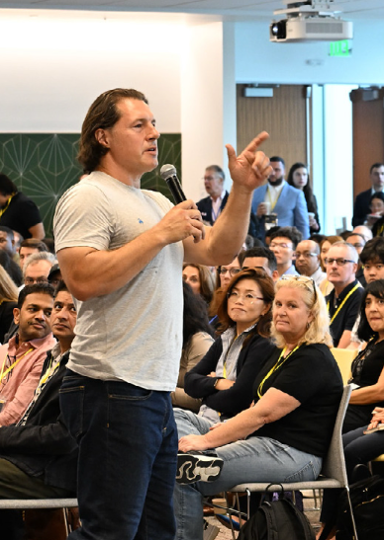
The company’s philosophy is that building intelligence requires studying how humans use intelligence, which then informs how the models are developed, Peng explained.
Axiom is using formal mathematical proofs to train AI, aiming to build a verified “super intelligence.” Founder and CEO Carina Hong said math is a “perfect sandbox” for developing these problem-solving approaches that can later be applied to other domains. Through self-improving systems, models can reflect and learn from their mistakes. Then multiple models can interact with each other to continuously improve each others’ performance. This helps human researchers discover new questions and hypotheses worth pursuing.
By translating every problem, solution, and proof into a computer-readable format—much like computer code—Hong believes we can usher in an era of “mass intelligence” where AI can be applied at high speed to various applied sciences. She offered the example of AI potentially solving extremely difficult partial differential equations, which could lead to major breakthroughs in areas like nuclear reactor design.
Open collaboration as competitive advantage
As research applications multiply, an interesting dynamic is emerging around openness versus consolidation.
Tengyu Ma, chief AI scientist at Mongo DB, assistant professor in computer science and statistics at Stanford University, and cofounder of Voyage AI, which was acquired by Mongo DB, sees a trend toward more consolidation among AI models. Currently, only a handful of major models like OpenAI and Anthropic dominate the space.
However, openness may become the catalyst for breakthroughs in AI research. For humanity as a whole to stay at the cutting edge, experts argue that research should be done openly to foster more partnerships and support between institutions across academia and industry. Open-sourcing data is seen as a key solution to promoting transparency and allowing for the replication of results, a fundamental to the scientific method.
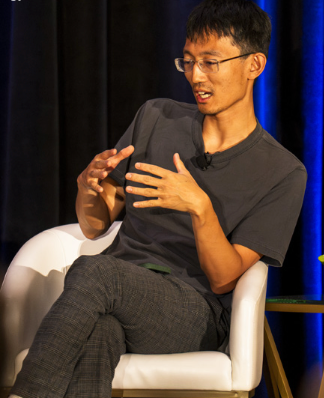
Mike Abbott, cofounder of Open Athena, which partners with academic labs to build large AI models, argues that conducting research “out in the open” can ensure that the U.S. stays ahead of the curve, as well.
“We need to be working together across these different institutions … and promote interdepartmental collaboration – that’s where those big breakthroughs come.”
Mike Abbott, Open Athena
For founders emerging from university labs, the message is clear: the opportunity is massive, but success requires more than technical brilliance. It demands passion for solving real problems, strategic thinking about commercialization, a commitment to rigorous evaluation, and embracing open collaboration.
Founder Takeaways
Explore The Future of AI | This article is part of our Future of AI series from Imagination in Action 2025 Silicon Valley Summit — where founders, leaders, and investors explored the next revolution of AI. We explored how AI is changing scientific research, creating new startup economics, straining power grids, and challenging us to rethink everything from enterprise software to regulatory frameworks. Dive into the Future of AI magazine to see the full picture.

