


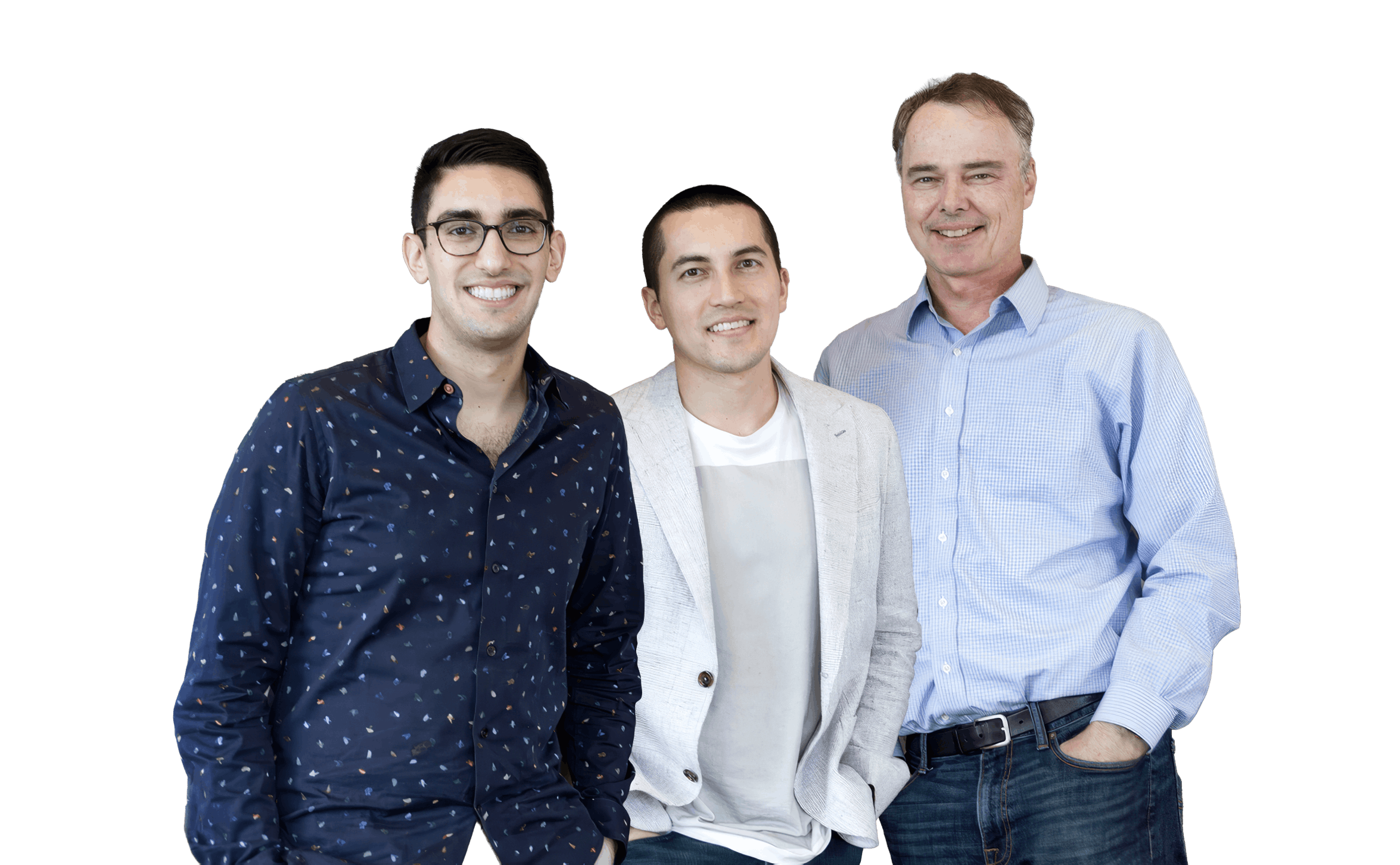

The Founding Bet
Armon Dadgar and Mitchell Hashimoto first crossed paths as freshmen at the University of Washington. Armon was looking for a research assistant position, and Mitchell was the one who said the work “looked fun.” It wasn’t. Mitchell quit within months. But the friendship that formed over lunches and conversations about open source and the future of software never did.
They founded HashiCorp in 2012, working from an Ikea desk in Armon’s apartment, convinced that every major company would eventually need a better way to deploy software across cloud infrastructure.
When Mayfield first connected with them in 2014, it wasn’t through a pitch – it was through a signal. We had noticed that HashiCorp’s developer tools were being downloaded at a remarkable and accelerating rate.
When the full partnership sat down with Armon and Mitchell, what stood out wasn’t the traction alone. It was that they were builders who had formed a genuine, early technical conviction: that no single cloud provider would ever serve every need, and that the practitioners who built on cloud infrastructure were the real strategic decision-makers in enterprise technology.
Multi-cloud was not a consensus view in 2014. At Mayfield, we’ve built our reputation backing infrastructure companies across every technological wave. And in my experience, the infrastructure companies that define an era are always a few years ahead of the market. We led their $10.2 million Series A round because we believed in the thesis and the founders behind it.
Building the Leadership to Scale
For the first few years, Armon and Mitchell built methodically – developing a six-product open source portfolio and cultivating one of the most loyal developer communities in the industry. But as the company grew, they faced a challenge that most founders avoid acknowledging: they were both technologists, and they knew it.
For months, they awkwardly alternated management responsibilities, throwing one-on-ones, board prep, and organizational planning back and forth. It wasn’t working, and they were self-aware enough to say so.
Their solution was unusual for the era: they hired a professional CEO. Dave McJannet had spent his career scaling enterprise companies at Microsoft, VMware, Hortonworks, and GitHub – building a track record at precisely the kind of companies HashiCorp aspired to become. Over multiple dinners across four months, Armon and Mitchell became convinced that Dave wasn’t looking to put his name on the company. He just wanted it to succeed. They handed him the keys and stepped into co-CTO roles – a move that required genuine security, and that paid off more than any of us anticipated.
What followed was a genuine three-way partnership. Dave brought the commercial discipline and go-to-market sophistication the company needed to grow from an open-source darling into an enterprise platform. Armon and Mitchell stayed focused on product, community, and technical vision. Together, they aligned on three principles that would define HashiCorp’s growth arc: the world would be multi-cloud; the practitioner was the kingmaker; and professionalism – real reliability, real trust – was the only way to earn the business of the world’s most demanding enterprises.
That last point proved decisive in ways that compounded over time. HashiCorp never glorified chaos or celebrated the hustle. They built a company that the world’s financial systems and energy grids could depend on. That culture of reliability – built deliberately, sustained consistently – became one of HashiCorp’s most durable competitive advantages.
The Growth Arc
Under Dave’s leadership, HashiCorp scaled with a go-to-market model that was years ahead of the market. Rather than investing heavily in traditional enterprise sales, they built a product-led motion: tools downloaded by practitioners, adopted inside organizations, eventually purchased by buyers with budget – what the industry now calls COSS, the commercial open source model. It gave HashiCorp an extraordinarily efficient path to enterprise revenue while keeping them deeply embedded in the developer community that had made them matter.
By the time of their IPO in December 2021, HashiCorp had grown from a 4-person team into a global organization serving many of the world’s largest enterprises.
In 2025, IBM acquired HashiCorp for $7.7 billion, one of the most significant infrastructure acquisitions in the cloud era. The outcome validated what the founding thesis had always argued: that multi-cloud was the platform opportunity of the generation, and that the company that helped enterprises navigate it would become indispensable.
The Playbook for Building an Infrastructure Company
HashiCorp was built by Armon, Mitchell, and Dave – and by an exceptional team around them. Thirteen years, one IPO, and a $7.7 billion acquisition later, I can say without hesitation: this is what inception-to-iconic looks like.
For any founder building AI infrastructure today, these are the lessons I take from the HashiCorp company-building journey:
Back a Conviction, Not a Consensus
The multi-cloud thesis was not obvious in 2014. At Mayfield, we’ve built our reputation backing infrastructure companies across every technological wave. If the vision requires explanation to most investors, that is often a signal – not a reason to walk away.
The Practitioner is your Distribution
HashiCorp built products that practitioners loved and chose on their own. That community became the foundation of their enterprise business. In enterprise infrastructure, the engineers who build and run the systems are the real decision-makers. Win them first. The budget follows.
Open Source is a Go-to-Market Strategy
The commercial open source model – build tools developers download and use freely, then let enterprises pay for the scale and support they need – is one of the most powerful GTM engines in enterprise software. HashiCorp mastered it earlier than most, giving them a compounding advantage that was very difficult for competitors to replicate.
EQ is an Elusive Concept, But You Know It When You See It
Armon and Mitchell’s decision to hire Dave McJannet was one of the most consequential choices in HashiCorp’s history. It required genuine self-awareness – recognizing that what the company needed to scale was not what the founders were best positioned to provide. The right operator at the right moment is not a concession. It is a force multiplier.
Trust is a Moat
In consumer software, delight wins. In infrastructure, trust wins. The enterprises that run the world’s critical systems do not take chances on vendors they cannot depend on. HashiCorp’s commitment to reliability – in product, in support, in culture – earned them access to the world’s most demanding customers and made them extremely difficult to displace.
Company Building is a Marathon, Not a Sprint
HashiCorp was founded in 2012, went public in 2021, and was acquired in 2025. Thirteen years of staying true to a mission, adapting the business model, expanding globally, and executing with discipline. The outcome is the result of that entire arc – not any single moment within it. The founders who build enduring infrastructure companies think in decades.
For an investor who believes the most important thing you can do is show up at inception and help founders navigate the ups and downs over the long haul, the HashiCorp journey has been exactly that. It has been an honor and a privilege to have been along for the ride. Onwards and upwards.


