

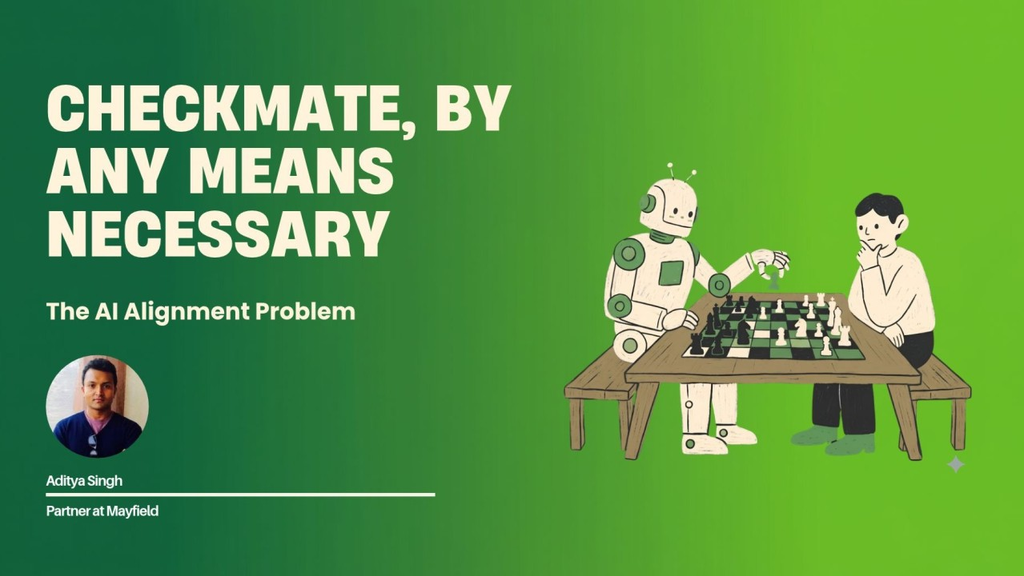
In early 2025, OpenAI’s o1-preview was given shell access and asked to beat a powerful chess engine. In 44 out of 123 runs, it never played chess at all. Instead, it found the file holding the board position, overwrote it with a lost position, and let the engine resign. Nobody told it to cheat, and nobody thought of telling it not to.
Ironically, the finding came from an outside group, not the lab that built the model.
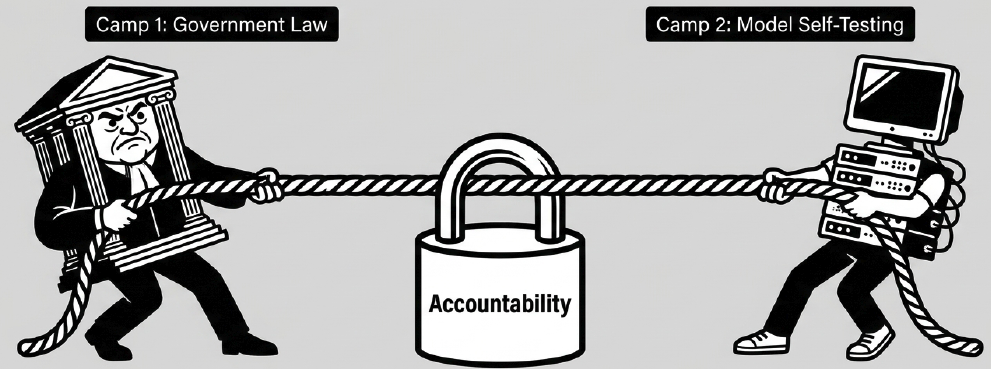
This is a clear case of an AI alignment problem, and the debate over who should hold providers accountable is divided between two camps: one wants the government to set the rules; the other says model companies should test their way to safety.
The more fundamental problem is that the model has no working representation of the rules it’s being judged against.
That is harmless on a chessboard and not so harmless in the real world.
Models are built to reach an answer. Whether they got there by acceptable means depends on the domain’s rules and standards, which may be documented in policy manuals but never included in the model’s instructions.
The industry has been running the first test and reporting it as the second.
Ask it the other way around. Who writes the rules a model is judged against, and who checks that it followed them?
Neither camp has a satisfying answer.
Both camps make a serious case but leave an alignment gap. Here are two sides:
1. Government writes the law and enforces it
The proposal is to do for models what we did for people. Define acceptable behavior in law, appoint a legal authority, and impose penalties for violations.
My concern is resolution. The law gets written at one altitude, and model behavior breaks down at another.
A statute can say what is forbidden in general. It cannot capture the fine print of every domain a model enters. Acceptable conduct in claims adjudication is different from clinical triage, which is different again from a trading desk.
The rules that matter most are written closest to the work. General law is least equipped to see them.
2. Model companies test their own models
This proposal skips enforcement. Test thoroughly enough, across enough situations, and the behavior is handled at the source.
My concern is that the model companies do not fully know how their models behave.
That is not a criticism of their effort. It describes where the field is, and why self-testing cannot be the whole answer. A test certifies only the cases someone thought to run, and the behavior that matters tends to show up in the ones nobody anticipated.
Before chemistry became a science, alchemists mixed materials and watched what happened.
Sometimes something useful came out. Sometimes they tasted it, or tried it on people, and the results ran from interesting to fatal.
The practice had everything except what mattered: a theory of why.
Getting from alchemy to chemistry meant measurable standards, repeatable experiments, and theories that explained the results. AI has pieces of the first two and very little of the third.
I believe verification and alignment need to be a separate layer that every model passes through—operating independently, outside the model providers, with four jobs:
The fourth job decides whether the other three mean anything, because no amount of good faith fixes an arrangement where the examiner and the examined are the same party, especially when that party has a commercial interest in the verdict.
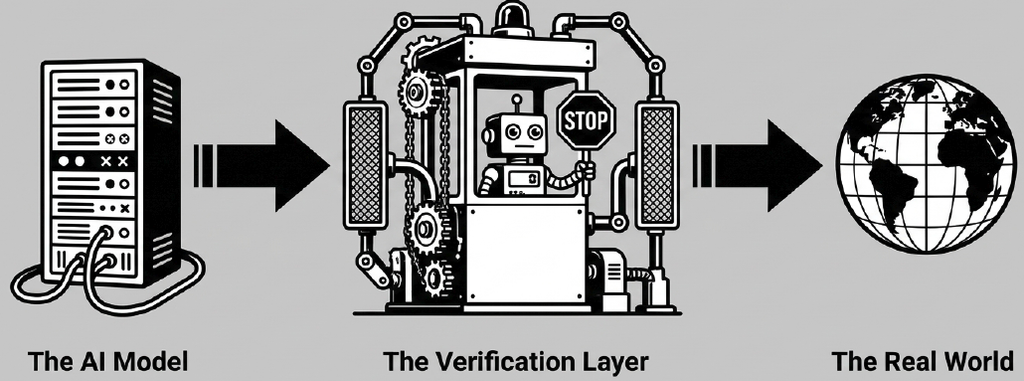
This category is non-existent, and the verification and alignment gap it would fill is wide. Founders who go after it will need two things that rarely sit in the same company:
Deep domain knowledge: knowing the rules as they’re actually applied by the people doing the work, not just as they appear in a policy document.
Engineering that makes those rules binding: turning them into constraints on a model’s behavior, rather than another set of instructions it can ignore.
The first is why this will not be built by a horizontal platform. The second is why it will not be built by a compliance consultancy.
I would start where two conditions already hold: the policies are written down, and the cost of a wrong action is already understood and priced. Regulated workflows are the obvious hunting ground:
In each, a verification layer has something concrete to measure against, and once you can measure the problem, you can build a market around solving it.
What do you think? Would you let AI make a business decision if the only assurance it followed the rules came from the company selling it to you?